



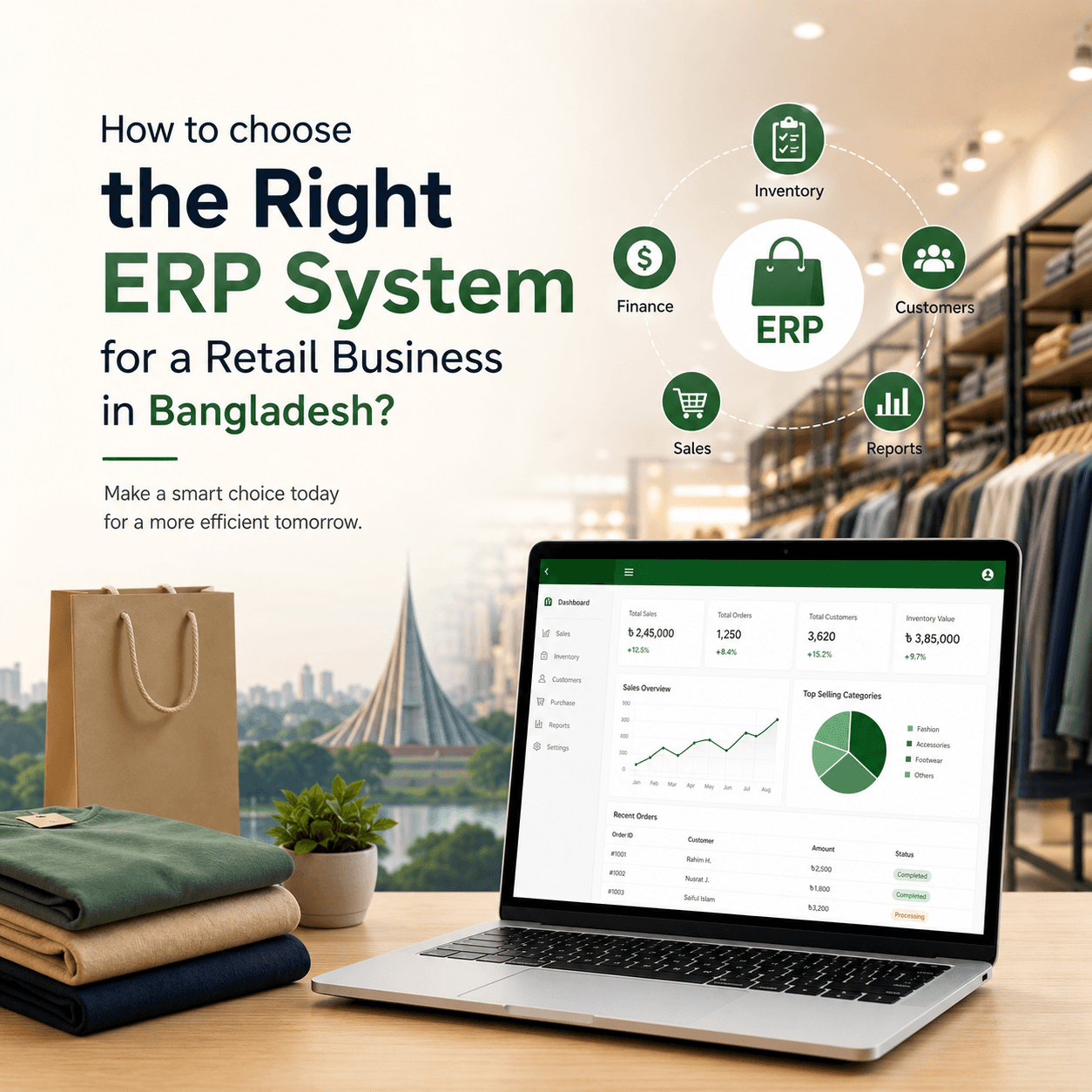
If you are running retail in Bangladesh right now, you already know the real challenge is not “selling.” It is controlling everything behind the counter. Stock accuracy, supplier bills, discounts, returns, damaged items, multi-branch reporting, VAT compliance, and staff accountability all pile up fast. That is exactly why choosing the right ERP for retail business matters so much, and why so many growing brands are actively searching for ERP for retail business solutions that actually fit Bangladesh’s day-to-day reality.
The truth is, ERP for retail business is not just a “big company” thing anymore. Whether you have one outlet or twenty, the right setup can turn chaos into a clean system: real-time inventory, faster purchasing, smarter pricing, and reports you can trust. In this guide, we will walk through how to pick the right ERP for retail business in Bangladesh, what to prioritize, what to avoid, and how to budget without surprises.
Why Retail Businesses In Bangladesh Need ERP Now (Not Later)
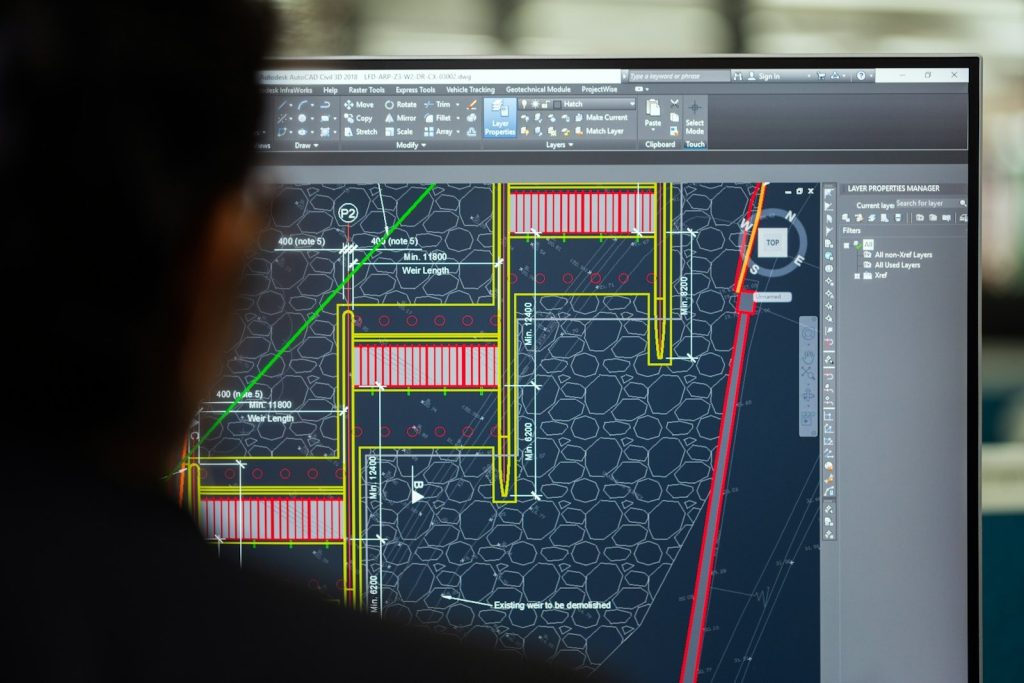
Retail has become more complex than it was even three years ago. Customers want consistent pricing across channels. Suppliers change lead times. Product variety keeps expanding. And once you start opening branches, manual stock tracking becomes an expensive guessing game.
A solid ERP for retail business connects your POS, inventory, purchasing, finance, and reporting so that every sale automatically updates stock, margin, and cashflow. You stop depending on end-of-day Excel sheets, and you stop discovering problems after they already cost you money.
In Bangladesh, many businesses begin with standalone tools like accounting software, a POS app, or basic inventory management software Bangladesh options. That can work early on. But as soon as you have multiple stores, multiple warehouses, or frequent promotions, ERP becomes the system that keeps everything aligned.
Start With Your Retail Reality (Not Features)
A common mistake is choosing from a “top 10 erp software in Bangladesh” blog list and buying based on popularity. Popular does not always mean suitable. Instead, begin by mapping how your retail business actually runs today.
Think in terms of your daily pain points. Are you losing stock due to poor transfer tracking? Do you struggle with purchase planning? Are your POS reports different from your finance reports? Do you lack batch/expiry tracking for FMCG? Each issue points to the modules and workflows your ERP for retail business must handle.
Here are a few examples of “retail realities” in Bangladesh that your ERP should support smoothly: multi-branch operations with central control, local supplier management, Bangladeshi tax and VAT needs, seasonal promotions, and user-level approvals to prevent internal leakage.
The Core Modules You Should Prioritize For Retail
At minimum, your ERP for retail business should not feel like separate software stitched together. It should feel like one flow from purchase to sale to accounting. Most retail businesses in Bangladesh get the fastest ROI when these modules are strong from day one.
You do not need to buy everything at once, but you do need a system where these pieces can grow together without rebuilding later.
- POS with fast billing, returns, exchanges, offers, and barcode support
- Inventory with transfers, batch/expiry, reorder alerts, and stock adjustments
- Purchasing with supplier pricing, GRN, purchase returns, and approvals
- Finance with automated posting, receivables/payables, and bank/cash control
- Reporting with real-time dashboards by outlet, category, brand, and SKU
If your business has warehousing complexity, add warehouse management software Bangladesh capabilities like bin locations, picking, and barcode scanning. If you are planning to expand into your own production later, it helps if the system can also handle ERP for manufacturing Bangladesh functions without forcing a platform change.
Decide On Cloud, On-Premises, Or Hybrid (Bangladesh-Friendly View)
You will hear “cloud-first” everywhere, but you should choose deployment based on operations, connectivity, and internal control needs.
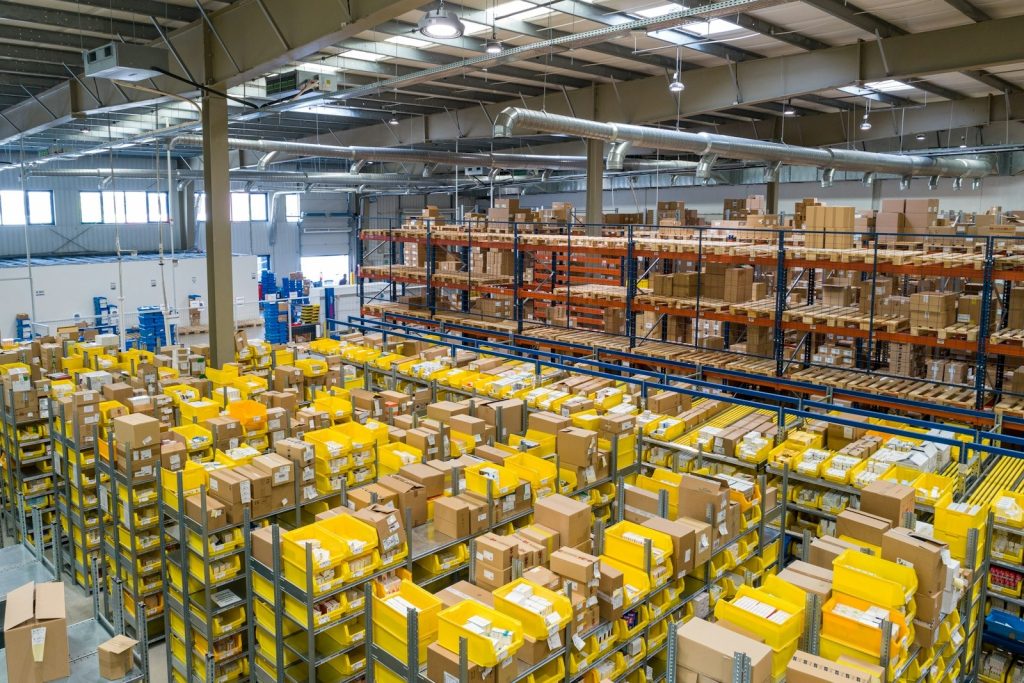
If your outlets have stable internet, cloud ERP Bangladesh is usually the simplest. It reduces server maintenance, speeds up rollout across branches, and gives owners easy access to live dashboards from anywhere. Hybrid can be useful when you want local control in a head office but still want cloud access for remote users. On-premises can still make sense for certain organizations with strict internal policies, but it adds IT overhead.
The key question is not what is trendy. It is what is reliable for your outlets and easy to scale when you open the next branch. A modern ERP for retail business should give you flexible options so you are not forced into one path.
Make Sure The ERP Is Modular So You Can Scale Without Waste
Retail businesses often start with immediate needs: POS, inventory, finance. Later they need CRM, loyalty, HRMS, warehouse optimization, or advanced approvals. This is where modular ERP matters.
For example, Focus solutions like Focus 9 and Focus X are modular, meaning you can start with specific functions like Finance, HRMS, CRM, Inventory, or POS, and then scale into a full enterprise system later. For many growing retailers, that is ideal because you get the value of ERP for retail business early, without overbuying.
Modularity also helps SMEs. Many owners searching for ERP software for SME Bangladesh really need a clear path: start small, standardize, then expand.
Integration Matters More Than You Think (Tally, SAP, QuickBooks, And More)
Bangladeshi retail companies often already use tools they cannot drop overnight. It could be Tally, QuickBooks, or even a legacy POS. So when you evaluate ERP software Bangladesh, ask a direct question: can it integrate cleanly with what we already have?
Modern ERP should support integration with tools like Tally, SAP, and QuickBooks, plus API options when you want to connect eCommerce or delivery platforms. This reduces migration pain and protects your earlier investments.
A strong integration layer is also how you avoid double entry, which is one of the silent costs that destroys productivity.
Look For Zero-Code Workflows And Role-Based Approvals (To Reduce Leakage)
Retail shrinkage is not just theft. It is also uncontrolled discounts, unauthorized price overrides, manual stock adjustments, and untracked returns.
A reliable ERP for retail business should offer role-based permissions and approval workflows so that sensitive actions require authorization. Systems with zero-code workflow creation are especially helpful because your process can evolve without heavy development.
Granular security also matters because retail teams are large and turnover is normal. You want a system where access can be controlled per role, per outlet, even per transaction type.
Reporting And Dashboards: The “Owner’s View” Must Be Real-Time
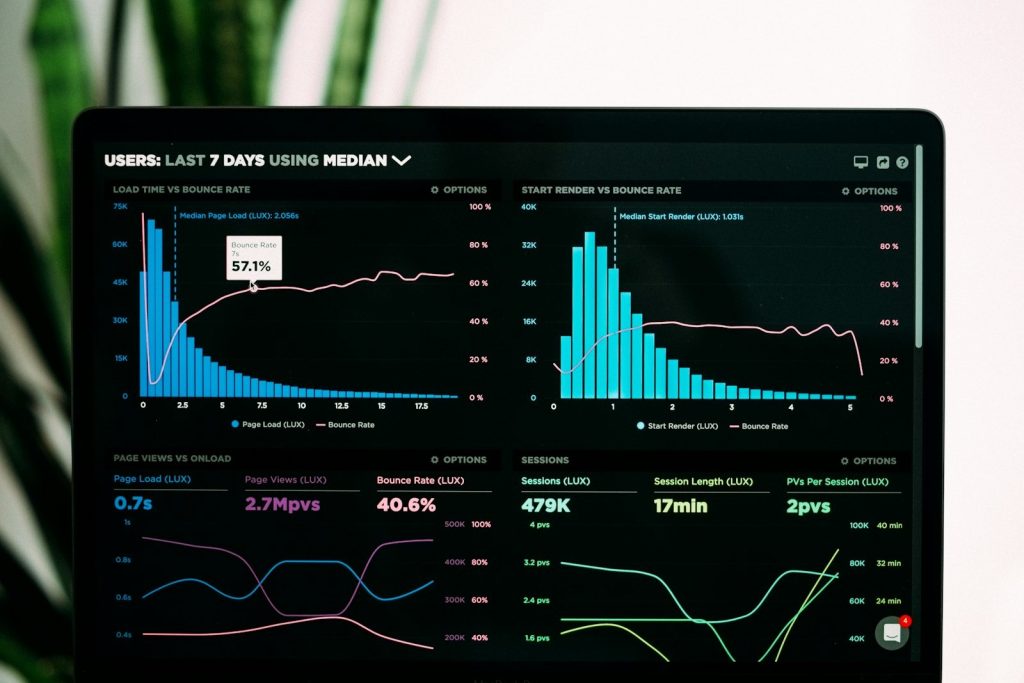
Most retailers think they need ERP to “manage inventory.” That is true, but the bigger win is decision-making. When dashboards are real-time, you can see which outlet is underperforming today, which SKUs are overstocked, and where margins are leaking.
Prioritize ERP for retail business platforms that offer real-time dashboards, mobile access, and clean reporting. AI-driven insights can be a bonus when they highlight anomalies, slow-moving items, or unusual discount patterns.
If the demo report looks impressive but takes two days to prepare in real life, it is not the right system.
Retail-Specific Features That Often Get Missed In Bangladesh
When comparing the best ERP software in Bangladesh, do not get distracted by generic feature lists. Retail needs certain “small” things that become deal-breakers later.
Your ERP for retail business should support barcode and QR code generation, fast POS operation during peak hours, smooth returns and exchanges, flexible promotions, and robust handling of damaged or expired stock. If you sell FMCG, batch and expiry tracking becomes non-negotiable. If you sell fashion, size and color variants must be handled naturally.
If you operate warehouses, the ERP should also cover warehouse workflows properly. Otherwise, you end up buying separate warehouse management software Bangladesh and dealing with syncing issues.
Think About Expansion Beyond Retail (Manufacturing, Garments, Distribution)
Many Bangladeshi brands do not stay “only retail.” They start importing, then assembling, then producing. Or they launch a garment line and add factories later. If there is even a small chance you will move into production, choosing an ERP that can handle manufacturing is smart planning.
Look for systems that can support manufacturing ERP software Bangladesh, MRP, and production workflows so you can grow without switching platforms. This is also relevant for businesses comparing garments ERP software Bangladesh or searching for the best garments erp software in Bangladesh, because garments businesses often need a blend of manufacturing plus retail plus distribution.
Even if you are not manufacturing today, your ERP for retail business should not block you from becoming a manufacturer tomorrow.
Evaluate The ERP Software Company, Not Just The Software
In Bangladesh, implementation quality often matters more than features. A strong ERP software company in Bangladesh will help you with process mapping, data migration, training, and post-go-live support. A weak partner will hand you software and disappear, leaving you with frustrated staff and half-used modules.
So when you shortlist ERP software Bangladesh options, evaluate the partner’s industry experience, support capacity, and whether they can help you standardize processes across branches.
A good partner will also be transparent about limitations. That honesty saves months.
Understand ERP Pricing And Implementation Costs In Bangladesh (Realistic View)
Owners often ask two questions first: “What is the ERP software price in Bangladesh?” and “How much will implementation cost?” Fair question, but ERP pricing is rarely one number.
Your cost usually depends on users, modules, outlets, integrations, deployment type, customization, training, and support. So when comparing options, ask for a clear breakdown that includes the likely ERP implementation cost Bangladesh will require.
Also, watch out for hidden costs like custom reports that should have been standard, extra fees for integrations, and expensive post-go-live changes.
A practical approach is to start with Phase 1 for your core retail operations, then expand. That way, your ERP for retail business investment starts paying back quickly while you build maturity.
How To Run A Proper ERP Demo (So You Do Not Get Sold A Dream)
Do not accept a generic presentation. Ask for an ERP demo Bangladesh that mirrors your exact workflow. Use your own sample products, discounts, returns, supplier invoices, and branch transfer scenarios.
In the demo, focus on speed and clarity. Can a cashier bill quickly? Can a manager approve a return? Can you see stock by outlet instantly? Can finance close the month without manual reconciliation?
If the vendor avoids showing real workflows and only shows slides, it is a red flag. The right ERP for retail business should feel like it fits your daily routine, not like you need to change your entire business to fit the software.
A Simple Checklist To Choose The Right ERP For Retail Business
Use this as your final filter when comparing providers. It keeps you grounded and makes meetings more productive.
- Does the ERP for retail business handle your POS + inventory + finance as one flow?
- Can it scale across outlets and warehouses without performance issues?
- Is it modular so you can expand later without rebuilding?
- Does it offer role-based security and approvals to reduce leakage?
- Are reports real-time and accessible on mobile?
- Can it integrate with your existing tools (Tally, QuickBooks, etc.)?
- Is the partner strong on implementation, training, and support in Bangladesh?
If a solution checks these boxes, you are not just buying software. You are building a system your retail team can actually run.
Where Infoex Bangladesh Fits In (And Why Modularity Helps Retail)
At Infoex Bangladesh, we simplify enterprise management through next-generation ERP software solutions that align technology with business goals. As a certified partner and distributor of Focus ERP, Farvision ERP, and Impact+ ERP systems, we work with organizations across finance, manufacturing, retail, and logistics.
For retail, Focus solutions such as Focus 9, Focus X, Focus WMS, Focus MRP, and Focus POS can be used as a complete system or as standalone modules. That means you can adopt ERP for retail business in a practical way: start with POS, inventory, and finance first, then add WMS, HRMS, CRM, or manufacturing features later as you scale. The platform also supports cloud, on-premises, or hybrid deployment, and offers strong integration, customization, role-based approvals, zero-code workflows, granular security, dashboards, mobile access, and barcode and QR code capabilities.
If you are comparing the best ERP software in Bangladesh and want something that can grow with you, modular architecture is often the difference between “ERP we use daily” and “ERP we regret buying.”
FAQs
What Is The First Step To Choosing ERP For Retail Business In Bangladesh?
Start by mapping your real workflows: POS, inventory transfers, purchasing, returns, and finance. Then shortlist ERP for retail business options that can demonstrate these exact scenarios in a practical demo.
How Much Does ERP Software Price In Bangladesh Usually Cost For Retail?
ERP software price in Bangladesh depends on modules, users, outlets, deployment type, and integrations. Always request a full breakdown including training, support, and ERP implementation cost Bangladesh to avoid surprises.
Is Cloud ERP Bangladesh A Good Choice For Multi-Branch Retail?
Yes, cloud ERP Bangladesh often works well for multi-branch retail because it centralizes data and reduces server maintenance. Ensure your outlets have stable internet and confirm offline billing options if needed.
Can ERP Integrate With Tally Or QuickBooks In Bangladesh?
Many modern ERP software Bangladesh platforms support integration with Tally, QuickBooks, and other systems. Confirm the integration method, sync frequency, and whether it is included or charged separately.
Do Retailers Need Warehouse Management Software Bangladesh Inside ERP?
If you have central warehouses, multiple locations, or high SKU volume, built-in warehouse management software Bangladesh features like bin tracking and barcode picking can significantly improve accuracy and reduce dispatch errors.
Get Started With Infoex Bangladesh
If you are serious about implementing ERP for retail business without wasting months on trial-and-error, we can help you shortlist the right modules, plan rollout by phases, and show you a realistic demo using your own retail workflows. We do not believe in forcing a complicated system on a growing business. We believe in building a clean, scalable foundation that your team will actually use daily.
Reach out to us at Infoex Bangladesh for a tailored consultation and an ERP demo Bangladesh that matches your outlets, inventory, and reporting needs.