



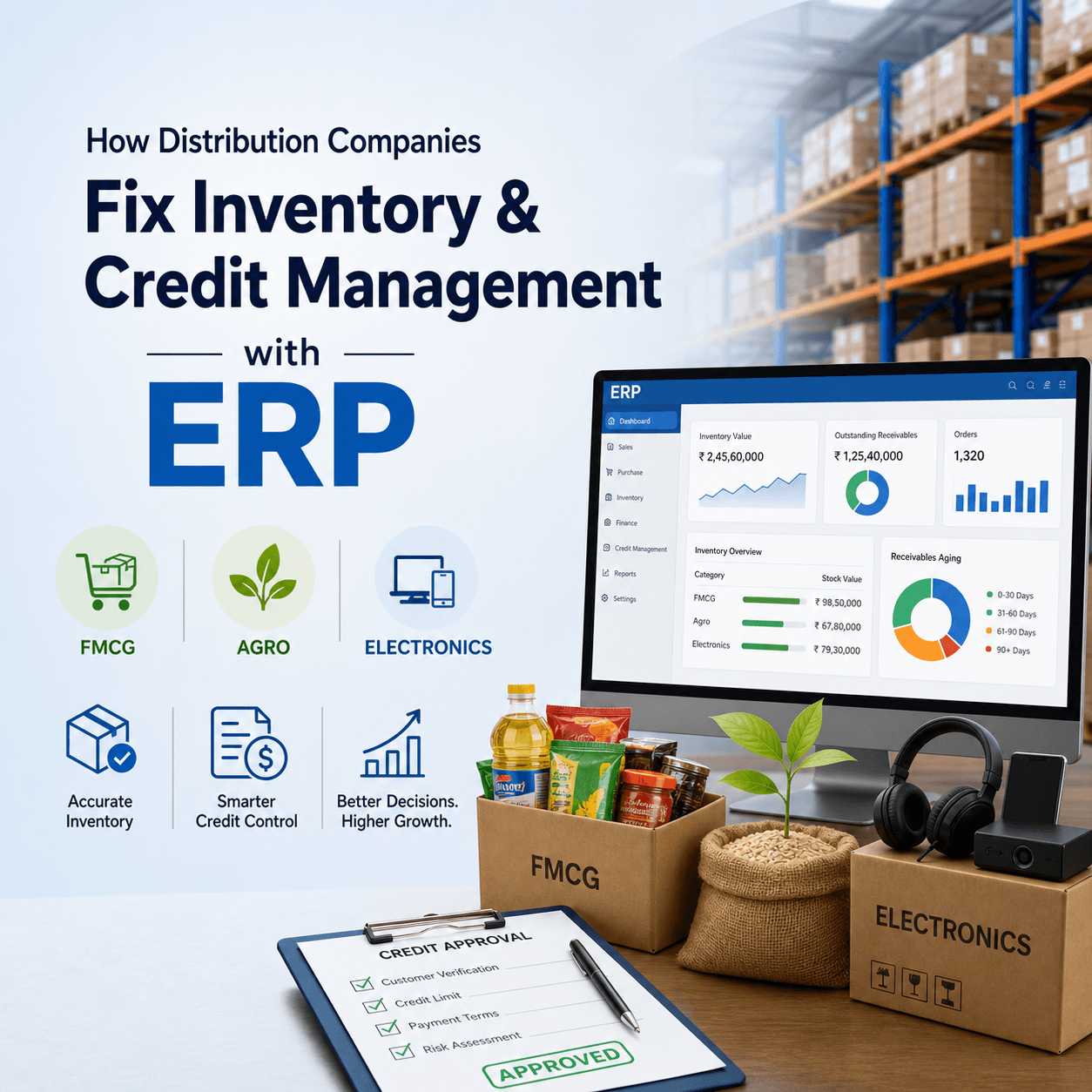
If you run a distributor, you already know the two problems that quietly decide your profit every month: inventory accuracy and credit control. And in Bangladesh, where FMCG, agro input, and electronics distribution can involve dozens of depots, hundreds of SKUs, and thousands of retail invoices, those problems multiply fast. That’s exactly why more teams are moving to distribution company ERP software Bangladesh to get real-time stock visibility, tighter approvals, and disciplined collections without slowing sales down.
At Infoex Bangladesh, we see it every day. A distribution business can look “busy” and still bleed money through expiry, damaged stock, wrong pricing, duplicate entries, and untracked credit. The fix is rarely one big change. It’s usually a system that enforces the right habits, automates the repetitive work, and gives management a single version of truth. In other words, modern distribution company ERP software Bangladesh that’s built for real operations, not just accounting.
Why inventory and credit become “silent loss” areas in distribution
Most distribution companies start with a mix of spreadsheets, WhatsApp updates, and basic accounting ERP. It works until the business scales. Then a few patterns appear.
Inventory issues usually start with simple mismatches: sales says stock is available, the warehouse says it’s not, and purchase says it’s “on the way.” In FMCG and agro, batch tracking and expiry add another layer. In electronics, serial numbers and warranty tracking complicate returns. Once your team is managing this manually, you don’t just lose accuracy. You lose speed, and speed is what keeps distributors competitive.
Credit issues are even more damaging because they distort your reality. Sales grows, but cash doesn’t. Over time, your best-selling territory becomes the biggest overdue territory. Without role-based approvals, limits, and collection discipline, you end up funding retailers’ businesses using your working capital.
This is where distribution company ERP software Bangladesh changes the game because it links inventory, sales, receivables, credit policies, and approvals into one controlled flow.
The ERP shift: from “recording transactions” to “running the business”
Older systems mostly record what happened. A modern ERP helps you control what is allowed to happen. That shift matters for distribution because your biggest risks are operational: wrong dispatches, incorrect pricing, unapproved credit, and delayed collections.
With the right ERP software Bangladesh, your teams stop working in silos. Sales sees live stock. Warehouse works off system pick lists. Accounts gets clean postings without manual re-entry. Management sees real profitability by product, territory, and customer.
And yes, you still get strong accounting ERP foundations. But you also get the distribution controls that spreadsheets cannot enforce.
What “fixed inventory” looks like inside a distributor using ERP
When inventory is under control, you feel it immediately: fewer disputes, faster dispatch, lower expiry write-offs, and better purchasing decisions.
A strong distribution company ERP software Bangladesh typically fixes inventory in a few specific ways.
First, you get multi-warehouse and multi-location stock with clear transfers. That matters in Bangladesh where distributors often run a central store, regional depots, and sometimes van stock. ERP ensures transfers are documented, approved, and visible, so “stock disappearing” is no longer a mystery.
Second, batch and expiry tracking becomes automatic for FMCG and agro. Your team can follow FEFO, block expired lots, and plan promotions before expiry kills margin.
Third, barcode and QR workflows reduce human error. With mobile access and barcode generation, teams can receive goods, pick, and dispatch using scanning rather than guesswork.
Fourth, returns and damages become a controlled process. In electronics distribution especially, warranty and serial tracking helps you confirm eligibility and prevent loss through fake return claims.
How ERP fixes credit management without “blocking sales”

Here’s the reality: if you control credit too aggressively, sales slows. If you don’t control it, cash flow collapses. The best distributors use ERP to enforce credit rules while still enabling fast selling.
A modern distribution company ERP software Bangladesh helps in a few practical ways. Credit limits can be set by customer, channel, or territory. Overdue rules can trigger warnings or blocks. Approvals can be role-based, so exceptions are visible and accountable. Collections can be tracked like a pipeline, not like a last-minute panic.
Most importantly, ERP allows you to separate “good customers who pay but need flexibility” from “repeat overdue customers who should be controlled.” That segmentation is hard to do reliably without a proper system.
With Focus-style workflows, you can implement approval chains that match your culture. For example, if a retailer exceeds limit, the invoice can require an Area Manager approval. If it exceeds by more than a threshold, it escalates to Finance. This creates discipline without forcing salespeople into long delays.
FMCG distributors: the ERP wins that show up fastest
In FMCG, the daily volume is high and margins are thin. So small leakages add up. ERP helps FMCG distributors reduce those leakages with better pricing control, trade scheme handling, and expiry management.
A proper setup supports multiple price lists, territory-based pricing, and customer-category discounts. It also helps ensure schemes are applied correctly, so you don’t “over-discount” due to manual errors. When returns happen, the batch and expiry history helps you validate them.
In Bangladesh, FMCG distributors also benefit from mobile sales features for field orders and instant invoice sync. When your field team and back office share the same data, reconciliation becomes far easier.
This is why distribution company ERP software Bangladesh is no longer a “nice-to-have” for FMCG. It’s becoming basic infrastructure.
Agro distributors: controlling batches, seasonality, and credit risk
Agro input distribution has its own complexity: seasonal spikes, batch-sensitive items, and high credit exposure to retailers who depend on harvest cycles. ERP helps you manage the seasonality with demand planning signals, and it reduces risk by enforcing credit terms by customer segment.
Batch and expiry tracking is non-negotiable here. One wrong batch can trigger disputes, returns, and reputation damage. With ERP, you can trace where a batch went, which customers bought it, and which invoices are involved. Implementing batch tracking systems can significantly streamline this process.
Also, agro distributors often run multiple product lines with different margin structures. ERP reporting can show profitability by product group, territory, and salesperson so you can stop over-investing in low-return areas.
Electronics distributors: serial numbers, warranties, and return control
Electronics distribution can look simple from the outside until returns begin. Serial tracking, warranty claims, and replacement workflows can destroy time and money if handled manually.
With ERP, you can record serial numbers at GRN and dispatch. You can validate warranty eligibility when returns occur. You can track service partner movements. And you can reduce fraud by ensuring each serial number has one clean lifecycle. This is where the importance of serial number tracking comes into play.
This is a major reason electronics teams search for best ERP software in Bangladesh that supports deeper tracking without becoming too complex for daily use.
Where WMS and MRP fit in distribution (and why it matters)
Many distributors think WMS and MRP are only for manufacturers. In reality, they are increasingly useful in distribution too.
A WMS module supports bin location control, pick-pack-ship discipline, and faster cycle counts. When your SKU count grows, WMS is the difference between “we think it’s there” and “it’s in aisle B, rack 3.”
An MRP module is useful when you do light assembly, bundling, or kitting, which is common in electronics and promotions. It helps plan components, manage kits, and track costs properly.
This is where solutions like Focus WMS and Focus MRP fit naturally, especially when you want to scale without rebuilding processes from scratch.
Why modular ERP matters for distributors who want a safe start
A lot of Bangladeshi distributors hesitate because they think ERP means a huge project. But modern systems are modular.
With the Focus ecosystem, teams can start with Finance, Inventory, and Sales, then add CRM, HRMS, WMS, MRP, or POS when ready. That modular architecture is ideal for growing distribution groups who need results quickly but also want a long runway.
At Infoex Bangladesh, we work with Focus 9, Focus X, and Focus WMS as modular options. Many companies begin with accounting ERP, receivables, and stock control, then scale into deeper workflows.
If you’ve searched for ERP solutions in Dhaka Bangladesh, this modular approach is one of the reasons serious businesses are switching to structured systems.
Focus ERP in distribution: what makes it practical in Bangladesh
Let’s talk plainly. Distributors don’t need “fancy.” They need stability, speed, controls, and reporting that managers can trust.
Solutions like focus erp are used globally because they support complex real-world conditions: multi-branch operations, approvals, strong security, and custom workflows without coding.
With Focus 9 ERP in particular, distributors benefit from strong integration options and structured transaction flows. Many teams also ask about Focus 9 technology because they want performance, scalability, and mobile access.
If your staff asks about Focus 9 login, that’s usually a good sign because adoption starts when teams can access what they need quickly, with role-based access controlling who can approve, edit, or view sensitive data.
From a practical standpoint, Focus ERP software also supports granular permissions, real-time dashboards, and smooth approvals. It’s the kind of ERP-focused approach that helps owners sleep better because exceptions don’t hide in spreadsheets.
Infoex Bangladesh: helping distributors transform without disruption
At Infoex Bangladesh, we simplify enterprise management through next-generation ERP software solutions aligned to business goals. As a certified partner and distributor of Focus ERP, Farvision ERP, and Impact+ ERP systems, we support digital transformation across finance, manufacturing, retail, and logistics.
For distribution companies, we typically focus on inventory discipline, receivables control, workflow approvals, and reporting that management actually uses. We also support cloud, on-premises, and hybrid setups. If you are comparing cloud ERP Bangladesh options, we’ll help you choose based on internet reliability, branch structure, security needs, and budget.
And because many businesses still use mixed systems, integration matters. Focus can integrate with tools like Tally, SAP, and QuickBooks, which helps companies modernize without forcing a painful “all at once” switch.
A quick look at the modules distributors adopt first
Most distribution companies don’t start with everything. They start with what stops losses immediately, then add what improves efficiency.
The most common starting stack for distribution company ERP software Bangladesh is finance, inventory, sales, and receivables, plus role-based approvals. Next comes WMS for warehouse speed, then CRM for pipeline visibility, then analytics dashboards for leadership.
If you’re in a niche like healthcare distribution, we also see a growing demand for erp for pharmacy, erp for pharmacy & pharmaceutical wholesale, and erp software for pharmacy workflows like batch control, expiry, and regulated sales controls. Many companies want an erp system for pharmacy that supports their unique compliance and distribution needs, and some ask for an erp solution only for pharmacy depending on their model.
What about Farvision, real estate ERP, and “other” ERP needs?
Sometimes distribution groups also run real estate assets or separate business units. That’s why we don’t force one-size-fits-all.
If your group has property operations, you may also be looking for real estate ERP software in Bangladesh or real estate ERP in Bangladesh. For that, platforms like Farvision are often evaluated. If you’re in that stage, we can arrange a FarVision ERP demo so your team can see project-wise billing, contracts, and property workflows clearly.
We also get questions about infrastructure and hosting, including platforms like Bengal Cloud, especially when companies want predictable performance and local support for cloud deployments.
And if you’re in textiles alongside distribution, you might have heard of knit composite erp solutions. In those cases, we usually map which unit needs what and then decide whether to integrate systems or standardize across the group.
The goal is always the same: choose ERP software Bangladesh that matches the operational reality, not just what looks good in a presentation.
The real decision criteria: what to check before you buy
If you’re shortlisting ERP software company in Bangladesh providers, don’t just ask for features. Ask how they will implement controls, migrate data, train teams, and support you after go-live. Also ask what reports your leadership will get in week one, because reporting is where trust begins.
Here are a few deal-breaker checks that matter for distribution company ERP software Bangladesh:
- Can it handle multi-warehouse and multi-branch stock with transfers and approvals?
- Can it enforce credit limits, overdue rules, and exception approvals without slowing sales?
Also ask about scalability, customization, and security. If you’re concerned about budget, discuss ERP software price in Bangladesh openly, including licenses, implementation, and support. A cheaper system that fails adoption is far more expensive than a well-scoped implementation.
What results look like after implementation (when done properly)
When ERP is implemented with the right processes, distributors usually notice cleaner stock positions, faster dispatch, fewer disputes, and improved collections. Management starts relying on dashboards rather than “end-month Excel.” Sales teams spend less time chasing internal confirmation and more time selling.
In many cases, the biggest win is cultural: people stop improvising. The system becomes the process.
That’s why so many businesses ultimately move to Distribution company ERP software Bangladesh even if they resisted it for years.
Why Infoex Bangladesh is a practical partner for distribution ERP

We’re not just selling software. We align workflows, approvals, and reporting to how your distribution business actually runs. We support implementations with Focus ERP and other systems, and we prioritize adoption because adoption is where ROI comes from.
If you’re searching for ERP for manufacturing Bangladesh along with distribution, we can also set up manufacturing modules like focus mrp to support production planning, raw material control, and costing—while still keeping distribution fast. This aligns perfectly with the insights from our guide on production planning ERP software, which outlines the benefits and best practices for implementing such systems.
And if you’re simply looking for best ERP software in Bangladesh for distribution, the answer is usually the one that fits your routes, warehouses, credit model, and reporting structure. We help you reach that answer without confusion.
FAQs
What is the best way to start with distribution company ERP software Bangladesh without disrupting operations?
Start with core modules like finance, inventory, sales, and receivables, then add WMS or CRM later. A phased rollout with role-based approvals keeps daily dispatch running smoothly.
How does distribution company ERP software Bangladesh help reduce stock mismatch between sales and warehouse?
ERP keeps a single live inventory ledger across branches and warehouses, with controlled transfers and barcode-based receiving and dispatch. Sales sees availability instantly, reducing false commitments and disputes.
Can distribution company ERP software Bangladesh enforce credit limits without blocking high-potential customers?
Yes. You can set customer-specific limits, overdue rules, and exception approval workflows. That allows flexibility for trusted accounts while ensuring risky overdues trigger warnings or require management approval.
Is cloud ERP Bangladesh a good option for distributors with multiple depots?
Often yes, especially if you need centralized control and fast rollout. The right cloud setup with role-based security and reliable connectivity gives management real-time visibility across depots and sales teams.
How should we evaluate ERP software price in Bangladesh for a distribution business?
Look beyond licenses. Include implementation scope, data migration, training, customization, integrations, and ongoing support. The right system pays back through reduced losses, faster billing, and improved collections.
Start with Infoex Bangladesh
If your inventory numbers don’t match the warehouse, and your receivables keep growing faster than your cash, that’s not “normal distribution pain.” It’s a solvable systems problem. At Infoex Bangladesh, we help teams implement distribution company ERP software Bangladesh using Focus ERP, Farvision ERP, and Impact+ ERP in a way your people can actually adopt, with controls that protect cash flow and reporting you can trust. If you want to see what this looks like for your FMCG, agro, electronics, or pharmacy distribution operation, reach out to us and we’ll map your workflow, show the right modules, and guide a clear next step.