



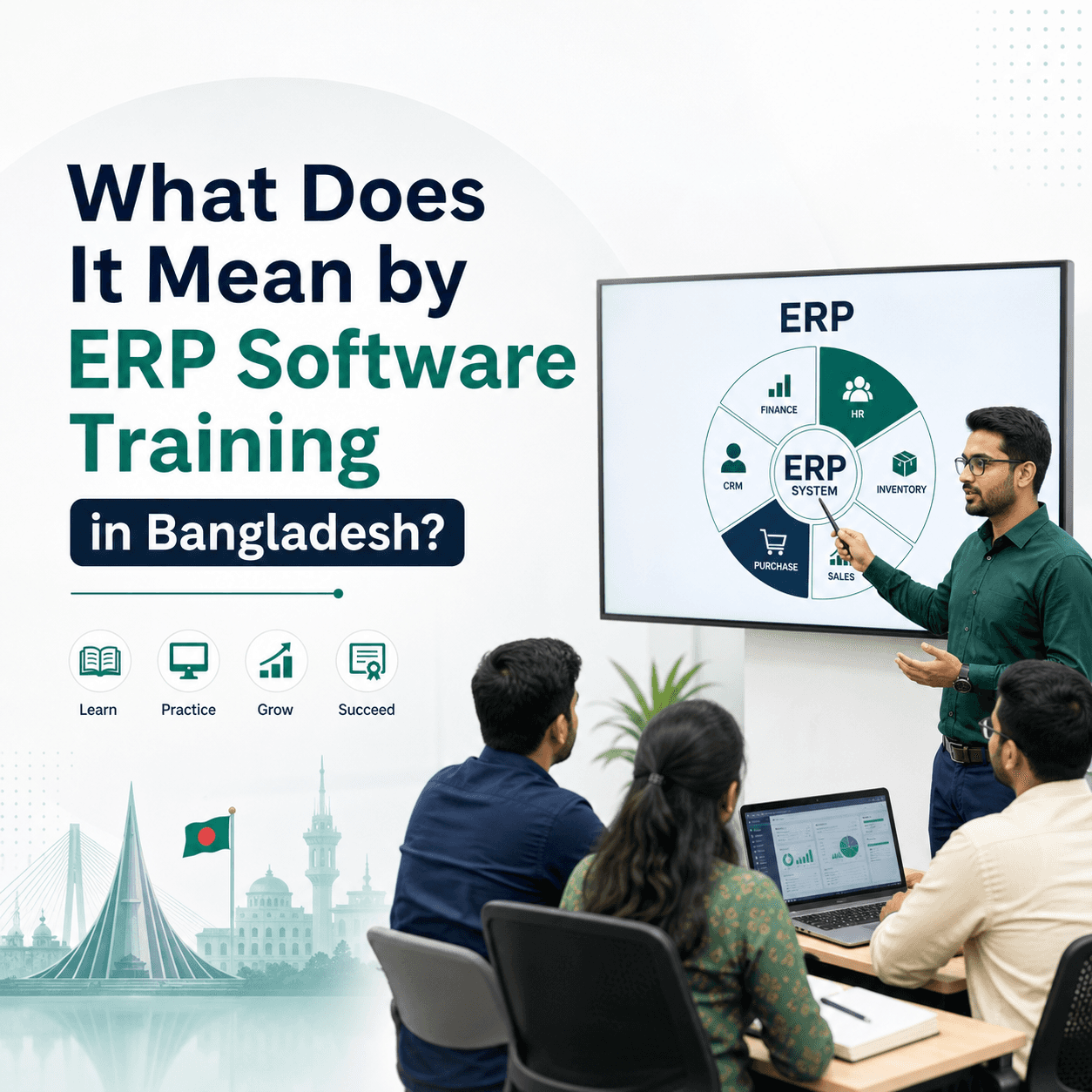
If you are investing in an ERP system, one thing becomes obvious very quickly: the software is only as successful as the people using it. That’s exactly why ERP software training matters so much, especially in a fast-growing market like Bangladesh where businesses are moving from spreadsheets and disconnected tools to full digital operations. In simple terms, ERP software training in Bangladesh means teaching your team how to correctly use an ERP system for real daily work, like purchasing, inventory, production, sales, accounts, HR, reporting, approvals, and management decision-making.
And because every business works differently, ERP software training is not just “how to click buttons.” It is a practical process that turns a complex system into a routine habit for your staff. When done properly, ERP software training reduces errors, builds confidence across departments, speeds up adoption, and directly improves ROI from the ERP investment.

Why ERP Software Training Is A Bigger Deal In Bangladesh Than Most People Think
Bangladesh has a unique mix of challenges and opportunities. Many companies are scaling quickly, expanding branches, opening new warehouses, running multiple factories, or managing export and compliance-heavy operations like garments. At the same time, teams often come from different software backgrounds; some are used to manual work, some use basic accounting tools, and some rely heavily on Excel.
That’s why ERP software training becomes the bridge between “we bought the system” and “we actually run the business on the system.” Whether you are looking at ERP software Bangladesh options for a new implementation or switching from a legacy solution, training decides how fast your teams can get productive.
In fact, when people ask about the best ERP software in Bangladesh, the real answer often depends on two things: how well it fits your business and how well your users are trained to use it.
What ERP Software Training Actually Includes (Not Just Basic Tutorials)
A good ERP software training program in Bangladesh typically includes role-based learning, real process simulation, and hands-on practice using your own business data structure, like items, chart of accounts, warehouses, BOM, cost centers, approval flows, and user permissions.
Most companies need training across multiple layers. Here are the core components you should expect:
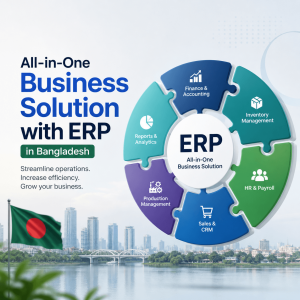
- Module training (Finance, Inventory, CRM, HRMS, POS, Manufacturing, WMS, MRP)
- Process training (procure-to-pay, order-to-cash, production planning, dispatch, returns, reconciliations)
- Control training (role-based approvals, audit trails, security, maker-checker flows)
- Reporting training (dashboards, real-time analytics, KPIs, MIS reports, management summaries)
This is also where tools like inventory management software Bangladesh features and warehouse management software Bangladesh workflows become real for users. Without proper ERP software training, even a powerful WMS or MRP module can feel confusing.
Who Needs ERP Software Training In A Typical Bangladeshi Organization?
One common misconception is that only the IT team needs training. In reality, ERP touches the entire organization. The right ERP software training plan maps to job roles, not job titles.
For example, an accounts officer needs confidence in vouchers, taxation setup, bank reconciliation, and approvals. A store officer needs GRN, stock transfers, batch tracking, barcode scanning, and reorder levels. A production planner needs BOM, routing, material issue, and work order tracking. A CEO needs dashboards, profitability views, and control reports.
So yes, you can train everyone. But you train them differently.
ERP Software Training vs ERP Implementation (And Why People Mix Them Up)
In Bangladesh, many buyers ask an ERP software company in Bangladesh about implementation and assume training is automatically covered in “go-live.” That’s risky.
Implementation is about setting up the system: modules, masters, workflows, migration, approvals, reports, and integrations. ERP software training is about user readiness: making sure real people can do real work without panic, delays, or wrong entries.
The best implementations treat training as a continuous track that runs alongside configuration, not as a one-day event at the end.
This is also where cost conversations become clearer. When you compare ERP implementation cost Bangladesh quotes, ask how training is included: number of sessions, role-based coverage, refresher support, and post-go-live handholding.
Common Types Of ERP Software Training In Bangladesh
Most Bangladeshi companies choose a mix based on team size, branch locations, and time constraints. The most practical approach is usually blended training, especially for companies with factories, multiple stores, or regional warehouses.
Classroom Or Onsite Training
This is common for manufacturing plants, retail head offices, and finance teams where hands-on practice matters. Onsite training is also helpful when the business wants controlled sessions with fewer distractions.
Online Training (Live Or Recorded)
Online training works well for distributed teams, especially for organizations adopting cloud ERP Bangladesh deployments, where users may log in from different sites. It is also easier to record, repeat, and standardize.
Department-Wise Role Training
This is where training becomes “real.” Instead of generic demos, each department learns the exact transactions and reports they will use daily. This is extremely effective for ERP for manufacturing Bangladesh and complex supply chain operations.
Why Manufacturing, Garments, And SME Businesses Need Special ERP Training
Different industries in Bangladesh have different pain points, so ERP software training must match the domain.
Manufacturing companies often need training on MRP, production planning, machine-wise costing, wastage tracking, subcontracting, and batch traceability. That’s why manufacturing ERP software Bangladesh training usually takes longer and needs more practice.
Garments businesses typically require training on buyer-wise costing, style management, materials planning, cutting, sewing, finishing, store control, compliance reporting, and shipment processes. If you are searching for garments ERP software Bangladesh or even the best garments erp software in Bangladesh, you should also ask how strong the training approach is for production floors and merchandisers. In garments, one small entry mistake can ripple into costing errors, delayed procurement, or shipment pressure.
For SMEs, training must be simple, quick to adopt, and highly practical. Many SMEs want a modular approach, which is why ERP software for SME Bangladesh buyers often start with finance and inventory, then scale gradually.

Where Infoex Bangladesh Fits In (And Why Modular ERP Training Works Better)
At Infoex Bangladesh, we simplify enterprise management through next-generation ERP software solutions that align technology with business goals. As a certified partner and distributor of Focus ERP, Farvision ERP, and Impact+ ERP systems, we help organizations drive digital transformation across finance, manufacturing, retail, and logistics.
A big reason modular systems succeed is that training can also be modular. Focus solutions like Focus 9, Focus X, Focus WMS, Focus MRP, and Focus POS can be used as a complete ERP suite or as standalone modules. That means ERP software training can start with what your team needs today, like Finance, HRMS, CRM, Inventory, or POS, and later expand.
This approach is especially helpful when a company is worried about user adoption. Instead of forcing everyone to learn everything, we focus on role clarity, daily workflows, and practical reporting first. Then we scale.
What Good ERP Software Training Looks Like In Real Life
If you want a quick benchmark, good ERP software training should achieve three outcomes by the end:
First, users can complete daily transactions without external help. Second, department heads can validate reports and catch mistakes early. Third, management can trust dashboards and make decisions faster.
In practical terms, training should cover your real workflows: purchase requisition to purchase order, GRN to invoice, stock transfer to dispatch, production order to finished goods, sales order to delivery, and receivables follow-up to collections.
For warehouse-heavy businesses, training often includes barcode or QR-based operations, location-wise storage, picking lists, and cycle counts. This is where warehouse management software Bangladesh capabilities become central, not optional.
How Long Does ERP Software Training Take In Bangladesh?
There is no single answer, but most projects fall into predictable ranges depending on complexity and number of modules.
A small setup (Finance + Inventory for an SME) might need 1 to 3 weeks of structured ERP software training plus early support. A manufacturing setup with WMS and MRP can take several weeks across departments, especially if the company is also redesigning processes.
What matters is not “training hours.” What matters is repetition, practice, and support through the first month after go-live, when real operational pressure begins.
ERP Software Training And Integrations (Tally, SAP, QuickBooks)
In Bangladesh, many companies don’t start from zero. They may already use Tally, QuickBooks, or even SAP in some parts of the business. When an ERP system integrates with these tools, training must include the integration workflow too.
For example, users need to understand what data flows automatically, what must be checked, and what happens if a sync fails. Focus ERP solutions support integrations and also offer strong customization and zero-code workflow creation. That means training is not only about standard screens, but also about your configured approvals, roles, and forms.
This is another reason ERP software training should be planned after workflow design is finalized, not before.
The Cost Side: Training, Pricing, And What Buyers Should Ask
People often search for ERP software price in Bangladesh and compare packages as if ERP is a fixed product. In reality, pricing depends on modules, users, deployment type, customization, and support. Training is part of that value.
When comparing vendors or evaluating the top 10 erp software in Bangladesh, ask training questions clearly. For example, does the training include role-based sessions? How many batches? Is refresher training included? Are there training guides and recorded videos? Is there post-go-live support?
Also remember, saving money on training usually increases operational cost later through errors, delays, and rework. That is the hidden cost many teams forget when estimating ERP implementation cost Bangladesh.
Cloud ERP Training In Bangladesh: What Changes?
With cloud ERP Bangladesh, training becomes easier in some ways and stricter in others. It is easier because users can log in anywhere, trainers can share screens, and sessions can be recorded. It is stricter because user permissions, security, and approval workflows become even more important when access is remote.
A proper cloud training plan includes mobile usage, role-based access, and security habits, especially for managers approving transactions from phones and teams working across multiple locations.
ERP Demo In Bangladesh: Why A Demo Is Not Training (But It Can Help)
An ERP demo Bangladesh session is a preview. It helps buyers understand the system, modules, dashboards, and possible workflows. But demos are not designed to build user competence.
That said, a good demo can be used to shape the training plan. During a demo, you can identify which departments need deeper sessions, what reports matter most, and which workflows should be automated using zero-code approvals.
The Most Common ERP Training Mistakes We See (And How To Avoid Them)
Most ERP failures do not come from “bad software.” They come from rushed adoption.
One major mistake is training only one “power user” and expecting them to teach everyone. Another is doing training too early, before masters and workflows are finalized. A third is not testing learning with real tasks, like closing a month, generating VAT reports, or running an MRP plan.
If you want ERP software training to stick, treat it like change management. People need clarity, repetition, and a safe environment to make mistakes before going live.
What You Should Expect After ERP Training Is Completed
After good ERP software training, you should see cleaner data entry, fewer approval bottlenecks, faster reporting, and less dependency on spreadsheets. You will also see departments speaking the same operational language because they are working inside one system.
For manufacturing and garments, training usually shows results in better stock accuracy, improved planning, and tighter control over costing. For retail, it shows up in faster billing, smoother returns, and better inventory visibility across stores and warehouses.
And if your ERP is modular, you will also be ready to scale into new modules without fear because your team already trusts the system.
FAQs
What Is ERP Software Training In Bangladesh?
ERP software training in Bangladesh means teaching employees how to use ERP modules in real operations like finance, inventory, sales, manufacturing, reporting, and approvals, so teams can run daily work accurately and confidently.
How Much Time Does ERP Software Training Usually Take?
Training time depends on modules, users, and complexity. SMEs may complete core training in a few weeks, while manufacturing and multi-branch operations often require phased training plus post-go-live support.
Does ERP Software Training Affect ERP Implementation Cost In Bangladesh?
Yes. Training is a key part of ERP implementation cost in Bangladesh because it reduces errors, shortens adoption time, and prevents expensive rework. Cheap training often increases long-term operational cost.
Is Cloud ERP Bangladesh Training Different From On-Premises Training?
Cloud ERP Bangladesh training often includes remote login practices, role-based security, mobile approvals, and online sessions. On-premises training is similar in process but usually more onsite and location-dependent.
Can We Start ERP Software Training With Only One Module?
Yes. Modular systems allow ERP software training to begin with Finance, Inventory, HRMS, CRM, POS, WMS, or MRP, then expand later. This approach works well for SMEs and growing companies.
Get Started With Infoex Bangladesh
If you are serious about making ERP work in the real world, we can help you do it the right way. At Infoex Bangladesh, we deliver practical, role-based ERP software training backed by proven ERP systems and real implementation experience, so your team does not just “learn ERP,” they run the business on it. Contact us today for an ERP demo Bangladesh session and a training plan tailored to your industry, modules, and goals.