



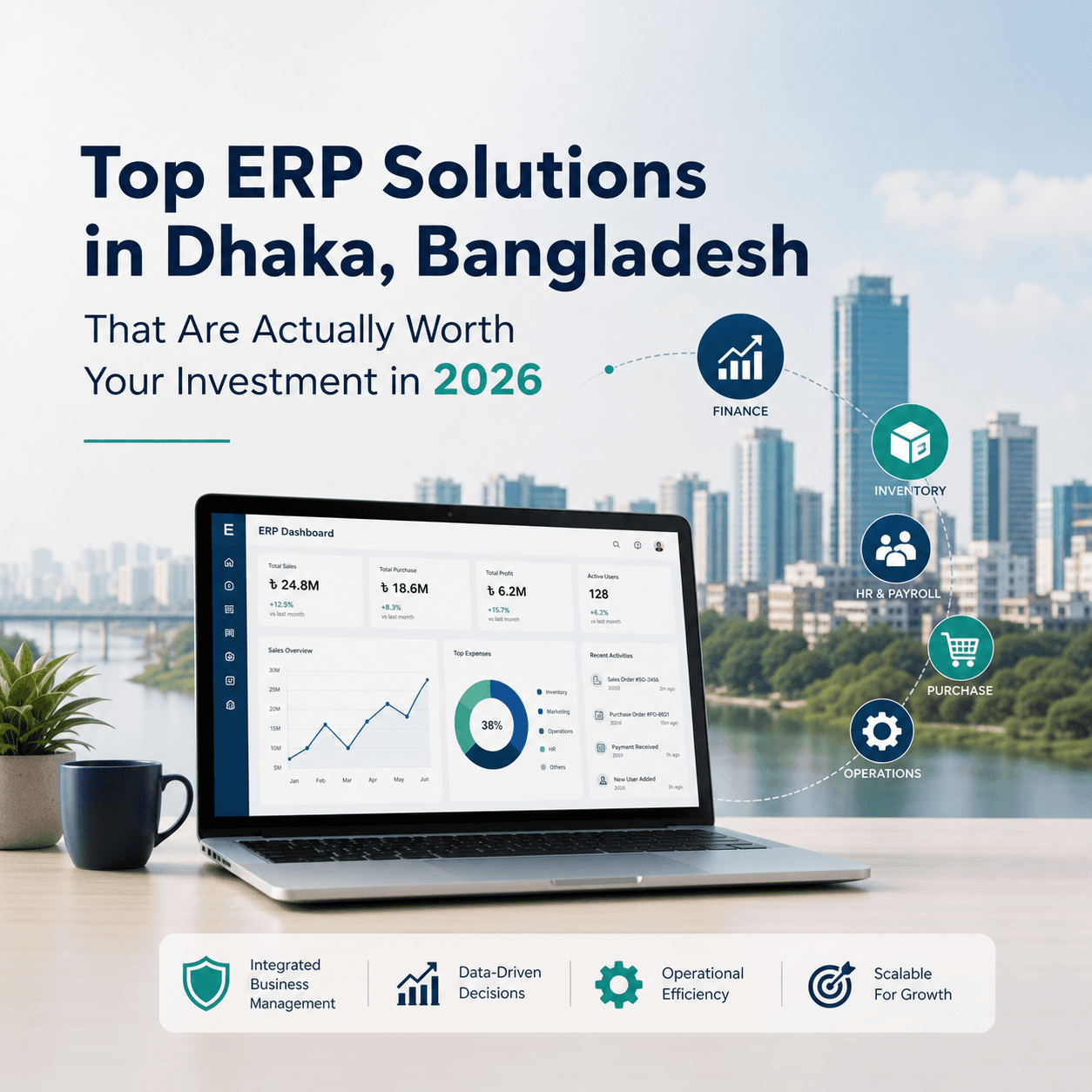
If you run a growing business in Dhaka, you’ve probably felt this shift already. In 2026, implementing the right ERP solutions in Dhaka Bangladesh isn’t just about keeping the books clean or tracking stock. It’s about speed, visibility, compliance, multi-branch control, and making decisions without waiting for three people to email you three different Excel sheets.
That’s why ERP software is no longer a “big-company thing” in Bangladesh. It’s becoming the standard for mid-sized manufacturers, distributors, retailers, real estate companies, logistics teams, service providers, and even fast-scaling startups. The real challenge is choosing an ERP that’s actually worth your investment, not one that looks good in a demo but turns into a never-ending implementation.
This guide is written specifically for Dhaka-based businesses choosing an ERP in 2026. We’ll cover what to look for, which solutions are genuinely solid, and how to avoid the most common traps.
Why ERP buying looks different in Dhaka in 2026
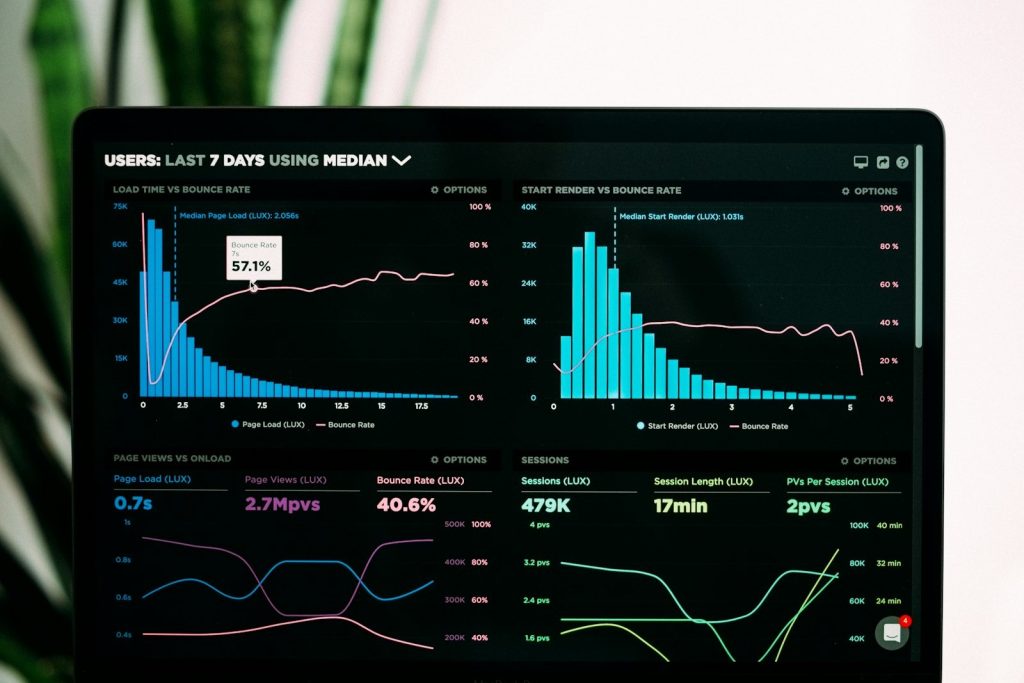
Dhaka has its own ERP reality. Many companies operate across multiple sites, depend on a mix of legacy accounting tools, and still have partial manual processes in procurement, HR, and inventory. At the same time, expectations are rising. Customers want faster delivery updates, management wants real-time profitability, and regulators want cleaner compliance.
In 2026, the “worth it” ERP systems tend to share a few characteristics: they integrate easily with other tools, adapt to your workflow instead of forcing you to change everything, and scale with you without doubling your cost at every step.
What makes an ERP “actually worth it” (the 2026 checklist)
Before we jump into the options, it helps to align on what “good” really means. Most ERP failures aren’t because the software is bad. They happen because the product, partner, or implementation approach didn’t match the business.
Here’s what we recommend you evaluate in Dhaka’s context:
You want integration that is real, not just promised. If your finance team uses Tally today, or you need to connect with SAP modules later, your ERP should support APIs and clean third-party integration without expensive workarounds.
Customization matters, but the best kind is “controlled customization.” You should be able to tailor workflows, approvals, and reports without rewriting the whole system. In 2026, no-code or zero-coding configuration is a major advantage, especially when your business changes every quarter.
Role-based workflows and multi-level approvals are a must for organizations that need control. You should be able to define who can approve purchases, who can view pricing, and who can edit inventory, across branches.
Scalability is a big one in Dhaka. Many companies start with a single company setup, then expand into group companies, multiple warehouses, or even multi-country operations. The ERP you buy should support growth without making you migrate later.
Finally, deployment flexibility matters more than ever. Some teams want public cloud for speed, some need private cloud for governance, and some still prefer on-premises for internal policy reasons. The right ERP supports all three.
Top ERP solutions in Dhaka that are worth your investment in 2026

Below are the ERPs we see Dhaka businesses seriously considering in 2026. Some are global enterprise platforms, others are more mid-market friendly. The “best” choice depends on how complex your operations are, how fast you’re scaling, and what kind of implementation support you’ll have locally.
1) Focus ERP (Focus 9 / Focus X) + Focus WMS, MRP, POS (modular if you want it)
If you want a modern ERP that’s strong on integration, flexible deployment, and scalable implementation, Focus ERP is one of the most practical choices for Dhaka in 2026, especially for businesses that need customization without getting stuck in endless development.
Focus 9 and Focus X are packed with modules, but the big advantage is you don’t have to buy and implement everything at once. You can start small with only Finance for 3 to 5 users, then add other modules as you grow. That’s a very real, very Dhaka-friendly model because many teams want a quick win first, then expand.
Focus also supports specialized modules like Focus WMS, Focus MRP, and Focus POS. These are available inside Focus 9/X, but can also be deployed as a single module if you want to solve one problem first, such as warehouse operations or retail billing.
Where Focus tends to shine in real deployments:
It supports high integration capabilities through APIs and third-party integrations, including Tally, SAP, QuickBooks, and many other applications. For some organizations, integrating with SAP for one or two modules can reduce costs massively compared to a full SAP rollout.
It supports higher customization while keeping the system maintainable. Teams can map workflows to how procurement, sales, and approvals actually happen inside the company.
It supports no-code or zero-coding implementation for creating workflows and generating numerous reports, which reduces dependency on developers for everyday changes.
It offers role-based workflow design, multi-level approval controls, and scalable architecture that fits single-company, group-company, and multi-country setups.
It also gives you deployment flexibility: public cloud, private cloud, or on-premises.
If your business sits in manufacturing, distribution, retail, logistics, or multi-branch operations, Focus is often a great balance of capability and cost control in Dhaka.
2) Farvision ERP (strong for real estate, engineering, project-based operations)
Farvision is widely known in South Asia for handling project-centric industries, especially real estate, construction, engineering, and large-scale project operations. In Dhaka, this matters because project-based organizations usually struggle with a different set of challenges than trading companies.
They need project costing, contractor management, material consumption tracking, progress billing, and complex approvals tied to project milestones. A generic ERP can do some of this, but the implementation gets messy if the ERP isn’t built with projects in mind.
If you’re a real estate developer, construction company, or engineering firm in Dhaka, Farvision is worth considering because it tends to align better with how projects run on the ground.
3) Impact+ ERP (practical for operational control and localized workflows)

Impact+ ERP is often chosen by businesses that want straightforward operational control, localized reporting, and a structured rollout without too much complexity. For many Dhaka teams, “worth it” means the ERP doesn’t overwhelm staff, training is manageable, and reporting fits how leadership wants to see the business.
If your priority is getting stable control over finance, procurement, sales, and inventory, and your organization prefers a practical implementation approach, Impact+ can be a solid contender.
4) SAP Business One (powerful, but choose carefully)
SAP Business One is a well-known name for mid-market companies that want SAP’s structure without a full-scale SAP implementation. In Dhaka, it can be a good fit for organizations that are already process-driven, have strong internal controls, and can support a more disciplined implementation.
The reason we say “choose carefully” is cost and complexity. Licensing, customization, and long-term support can become expensive, and the project can drag if the partner isn’t strong. But if you need strong governance, standardized processes, and long-term enterprise alignment, SAP Business One remains a serious option.
5) Microsoft Dynamics 365 (excellent ecosystem, depends on partner strength)
Dynamics 365 can be an excellent ERP platform, especially if your organization already lives inside Microsoft tools. The ecosystem is strong, and the platform can support both ERP and CRM in a connected way.
In Dhaka, the deciding factor is usually partner capability. Dynamics projects can succeed brilliantly or become painfully expensive if the scope isn’t controlled. If you’re considering it, focus heavily on partner references, implementation methodology, and clarity on customization versus configuration.
6) Oracle NetSuite (great for multi-entity and high-growth, premium pricing)
NetSuite is often picked by fast-scaling companies that need strong multi-entity management, consolidation, and global-ready processes. For Dhaka businesses with regional expansion plans, it can be a great fit.
The trade-off is pricing and the type of implementation team you’ll need. If your company is already operating at a higher scale and you want a cloud-first enterprise ERP, NetSuite is worth looking at. For most SMEs, it may feel like overkill.
Which ERP should you choose? A simple way to decide
Most ERP selection guides try to push you into a single “best” tool. In reality, Dhaka businesses are too diverse for that.
A better approach is to start with your operating model.
If you’re a distributor or manufacturer that needs smooth integration, strong approvals, flexible deployment, and the ability to start with finance and scale, Focus 9 / Focus X is often the most balanced option.
If you’re project-based in real estate or construction and project costing is the heart of your business, Farvision is usually worth serious consideration.
If you want an operational ERP with localized practicality and a smoother adoption curve, Impact+ can be a smart pick.
If you need brand-standard enterprise governance and are prepared for cost and structure, SAP Business One, Microsoft Dynamics 365, or Oracle NetSuite can fit, but they demand strong internal ownership and a very capable implementation partner.
Here’s the one short checklist we suggest you use during vendor demos:
- Ask for a demo using your own workflow: a real purchase approval, a real sales return, a real stock transfer, and a real month-end closing scenario.
- Ask what changes you can do without coding: workflows, approvals, reports, dashboards, and roles.
- Ask what integration looks like in writing: APIs, connectors, and examples like Tally, SAP modules, QuickBooks, or your existing tools.
The ERP implementation mistake that costs Dhaka companies the most

A lot of ERP projects in Dhaka fail for one predictable reason: companies buy software first and process clarity second.
If your approvals are unclear, item masters are messy, your chart of accounts is inconsistent, and your inventory units aren’t standardized, the ERP cannot magically fix it. It will just digitize the confusion.
A worthwhile ERP partner will help you simplify before you automate. That is usually the difference between a system your team loves and a system your team avoids.
Where Infoex Bangladesh fits into this (and why it matters)
At Infoex Bangladesh, we simplify enterprise management through next-generation ERP software solutions that align technology with your business goals. As a certified partner and distributor of Focus ERP, Farvision ERP, and Impact+ ERP systems, we help organizations achieve full digital transformation, from finance and manufacturing to retail and logistics.
In other words, we don’t just “sell ERP.” We help you choose the right scope, roll it out in phases if needed, and design the workflows, approvals, and reporting structure so the ERP becomes a daily decision-making tool.
FAQs
Which ERP is best for a growing company in Dhaka in 2026?
The best ERP depends on your industry and growth plan. Most Dhaka businesses benefit from an ERP that integrates easily, supports approvals, and scales gradually without forcing a full rollout from day one.
Can we start with only finance and add modules later?
Yes. With Focus 9/Focus X, you can start with only the Finance module for a small user base and then expand into inventory, sales, WMS, MRP, POS, and other modules as your operations mature.
Do we need cloud ERP, or is on-premises still okay in Bangladesh?
Both work in 2026. Many Dhaka companies choose cloud for speed and remote access, while others prefer private cloud or on-premises for policy reasons. The key is choosing an ERP with deployment flexibility.
Will the ERP integrate with Tally, SAP, or QuickBooks?
It can, if the ERP supports strong APIs and proven third-party integrations. Focus ERP is designed for high integration capabilities and can integrate with systems like Tally, SAP modules, and QuickBooks, reducing duplication and cost.
How long does a typical ERP implementation take in Dhaka?
Timelines vary based on scope, data readiness, and customization. A phased approach often works best, starting with core finance and approvals, then expanding to inventory, production, and advanced modules after stabilization.
What’s the biggest reason ERP projects fail locally?
Most failures come from unclear processes and poor master data, not the software itself. If roles, approvals, item structures, and reporting expectations aren’t defined early, the ERP ends up digitizing confusion instead of fixing it.
Start with Infoex Bangladesh
If you’re planning an ERP investment in 2026, here’s our honest PSA: don’t buy an ERP based on a flashy demo. Buy it based on how well it fits your real approvals, your real inventory problems, your real reporting needs, and your ability to scale without rebuilding everything later.
At Infoex Bangladesh, we help you evaluate Focus 9, Focus X, and the modular options like Focus WMS, Focus MRP, and Focus POS in a way that matches your business stage. We’ll scope it so you can start small, integrate with tools you already use, and expand confidently when you’re ready.
If you want, we can walk through your current workflow, recommend the right module mix, and show a demo using your own real-life scenarios so you can make a decision that actually pays back.