




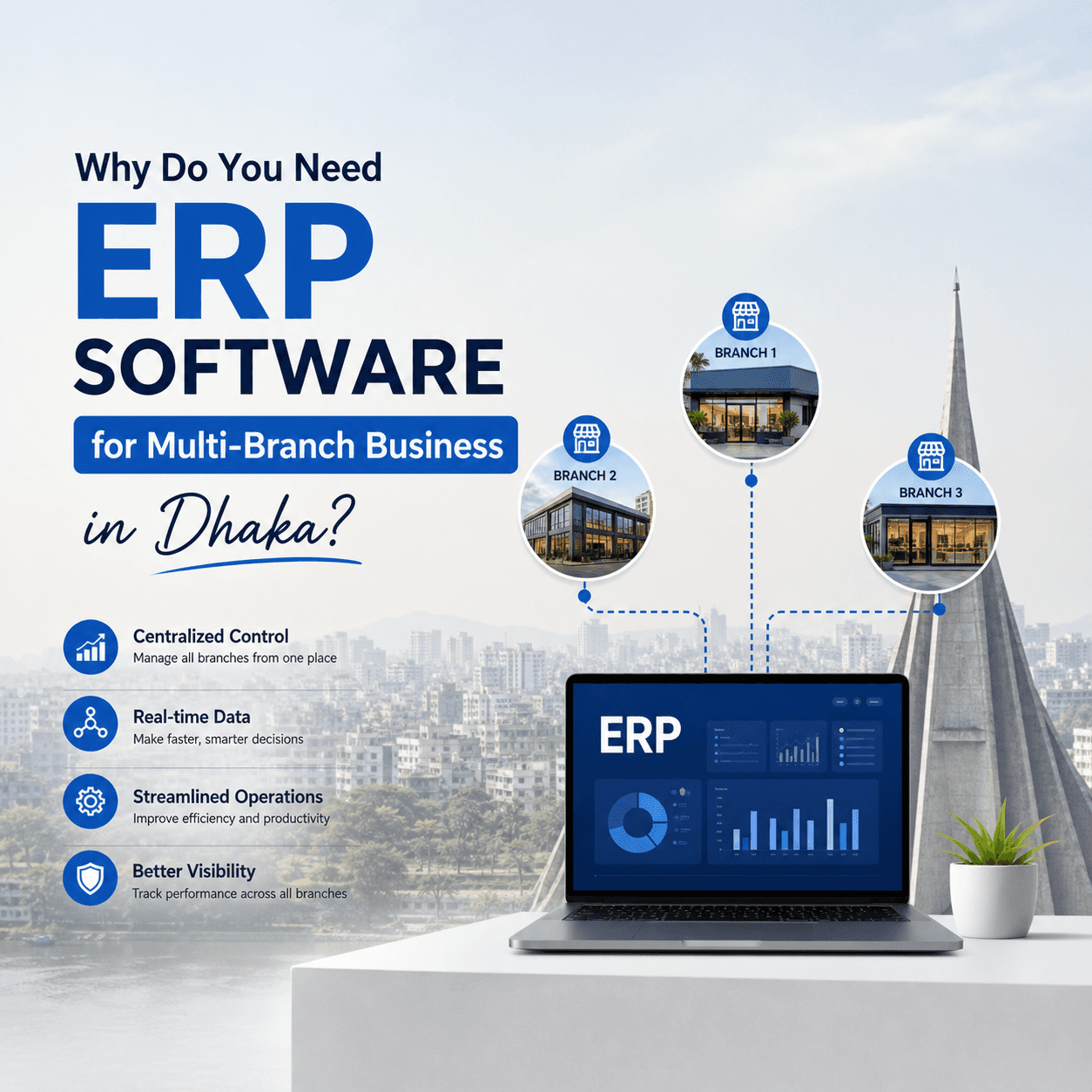
If you run a growing company in Dhaka, you already know the “multi-branch” part is both a blessing and a headache. More locations mean more sales, more staff, more inventory movement, and more opportunity. It also means more daily confusion if your data lives in spreadsheets, WhatsApp messages, separate POS systems, and disconnected accounting files.
That is exactly why ERP software for multi branch business matters so much in Dhaka. When every branch runs slightly differently, the gaps show up fast: stock mismatches, delayed approvals, inconsistent pricing, late reporting, and disputes about “which numbers are right.” The right ERP software for multi branch business pulls every branch into one system, with one set of rules, so you can manage faster and scale without losing control.
Dhaka’s Multi-Branch Reality: Growth Is Fast, Complexity Is Faster
Dhaka is a high-velocity market. Retail chains expand into new areas, distributors add new depots, manufacturers open sales centers, and service businesses run multiple outlets to stay close to customers. But as branches multiply, management starts to depend on manual coordination.
In real life, you might see issues like one branch selling items that another branch urgently needs, or finance waiting days to close monthly accounts because purchase bills arrive late. You may also struggle to enforce consistent credit policies, discounts, or approval limits across locations. This is where ERP software for multi branch business becomes less of an “IT upgrade” and more of a management necessity.
What ERP Actually Fixes In A Multi-Branch Business
ERP is not just accounting. It is the operating system of your business. It connects finance, inventory, sales, procurement, HR, CRM, production, and logistics into one flow.
With ERP software for multi branch business, you can standardize how branches work while still allowing branch-level control where it makes sense. Head office can see everything in real time, and branches can execute daily operations without chasing head office for every small decision.
One Source Of Truth For Every Branch (No More “Which Report Is Correct?”)

In multi-branch operations, the biggest silent cost is conflicting data. Sales numbers in the POS do not match finance. Inventory in the warehouse file does not match the store count. Returns are recorded differently across branches. Then management meetings turn into debates, not decisions.
A proper ERP software for multi branch business creates a single database where transactions are recorded once and reflected everywhere they should be. When a sale happens, stock reduces, revenue posts, receivables update, and dashboards refresh automatically. That is how you get clean reporting without waiting for manual consolidation.
Real-Time Inventory Control Across Branches, Depots, And Warehouses
If you manage inventory in Dhaka, you know how quickly things move. Stock transfers, inter-branch requests, urgent procurement, damage, expiry, and shrinkage can all happen in the same week.
With ERP software for multi branch business, you can track stock branch-wise, warehouse-wise, and even bin-wise if you use WMS practices. You can set reorder levels per branch, reserve stock for key customers, and reduce emergency buying because you can actually see what you already have.
If your business uses barcode workflows, modern ERP can generate barcode or QR codes, speed up receiving and dispatch, and reduce “human counting” errors that quietly destroy margin.
Faster, Cleaner Finance: Consolidation Without The Month-End Panic

Multi-branch finance becomes messy when each branch posts entries differently or submits bills late. Your head office accountant ends up spending days reconciling, adjusting, and chasing confirmations.
With ERP software for multi branch business, you can manage multi-branch accounting, centralized or branch-level, with consistent chart of accounts, approval flows, and automated posting from operations. Head office can consolidate branch performance, compare profitability, and close books faster.
And if you already use tools like Tally, SAP, or QuickBooks in some areas, strong ERP platforms can integrate with them, so you do not lose historical workflows while you modernize.
Standardized Pricing, Discounts, And Credit Control (Without Killing Branch Flexibility)
In Dhaka, pricing often changes based on area, competition, and customer type. That is fine, until branches start improvising beyond policy. Then you see margin leakage, inconsistent offers, and confusion at the customer level.
A solid ERP software for multi branch business lets you define pricing rules, discount limits, and customer-wise agreements. You can still allow branch managers some flexibility, but within structured controls. This is where role-based approvals and granular permissions become crucial, especially when your business grows beyond people you personally know.
Approvals And Accountability That Actually Work
Multi-branch operations live and die on approvals: purchase requests, stock transfers, credit notes, discounts, payroll changes, and vendor payments. If approvals depend on phone calls or Excel signatures, you will either move too slowly or lose control.
Modern ERP software for multi branch business supports role-based approvals, audit trails, and workflow automation. Even better, some systems let you build workflows with zero-code tools, so you can adjust processes as your organization evolves without waiting months for development.
Better Customer Experience Across Branches
Customers do not care which branch they are dealing with. They expect a consistent experience. They want their history, warranty, returns, loyalty points, credit status, and service requests to be visible no matter where they show up.
With ERP software for multi branch business, you can unify customer profiles and ensure that sales teams and support staff work with the same data. This is especially valuable if you run retail outlets, service centers, distribution networks, or B2B sales teams across Dhaka and beyond.
Production And MRP For Growing Manufacturers In Dhaka
Dhaka has a strong base of manufacturing and trading businesses that are now trying to run more professionally across multiple units, warehouses, and sales offices. If you manufacture, the problem is not just tracking finished goods. It is raw material planning, WIP tracking, batch control, job costing, and timely procurement.
This is where ERP modules like MRP (Material Requirements Planning) and manufacturing management become a game changer. The right ERP software for multi branch business helps you connect sales demand to production plans, production to raw material consumption, and production output to warehouse availability, without relying on guesswork.
Logistics And Distribution: Control The Last Mile Better
For distribution-heavy companies, multi-branch operations often mean multiple delivery points, multiple fleets, and multiple dispatch teams. Without system control, you may see repeated delivery delays, route inefficiency, and disputes over proof of delivery.
With ERP software for multi branch business, you can align order processing, dispatch, inventory allocation, and delivery confirmation into one flow. And if you connect warehouse processes through WMS, you also reduce picking mistakes and shipment mismatches.
Multi-Branch HR And Payroll Without Manual Chaos
When you have multiple branches, HR work becomes fragmented fast: attendance, overtime, leave approvals, onboarding, and payroll inputs. In Dhaka, where shift patterns can differ branch-to-branch, a unified HRMS approach becomes a big time saver.
With ERP software for multi branch business, you can standardize employee records, manage branch-wise attendance and leave, apply consistent salary rules, and keep HR compliant and audit-ready.
Why Modular ERP Matters More Than You Think

Many business owners delay ERP because they assume it must be “big bang,” expensive, and disruptive. In reality, modular ERP makes adoption more practical.
A modular ERP software for multi branch business lets you start with what hurts most today, maybe Finance, Inventory, HRMS, CRM, or POS, then scale into a full system as your team gets comfortable and your processes mature. That approach reduces risk, improves adoption, and delivers value earlier.
Cloud, On-Premises, Or Hybrid: What Fits Dhaka Businesses Best?
Deployment matters, especially when you have branches with different connectivity realities and different security expectations.
A modern ERP software for multi branch business should give you flexibility. Cloud deployment can reduce upfront infrastructure cost and simplify updates. On-premises can be preferred for certain compliance or control requirements. Hybrid can be the sweet spot when some locations need local performance while head office wants centralized visibility.
The key is choosing a platform that does not force you into one rigid option.
The “Hidden” Benefits: Faster Decisions, Less Stress, Stronger Control
Once ERP is properly implemented, the improvement is not only operational. It is managerial.
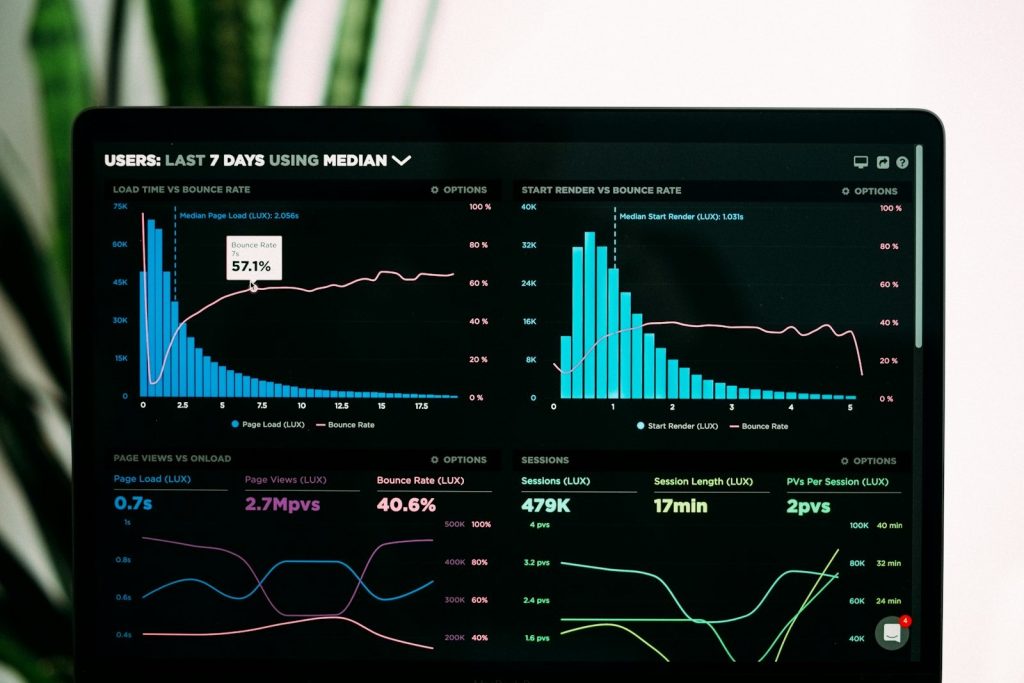
With ERP software for multi branch business, you stop managing by assumptions and start managing by live numbers. Your branch managers become more accountable because activity is traceable. Your finance team spends less time correcting and more time analyzing. Your leadership team can open a dashboard and see which branch is growing, which category is underperforming, and where cash is stuck.
If you have ever felt that your business is growing but you are losing visibility, that is a strong sign you need ERP software for multi branch business now, not later.
What To Look For When Choosing ERP Software For Multi Branch Business In Dhaka
Choosing ERP is not about picking the most famous name. It is about fit, scalability, control, and implementation quality. In Dhaka, you want a solution that supports multi-branch operations cleanly, handles local operational realities, and scales as you add branches, warehouses, product lines, and teams.
Here are a few must-haves that separate a good choice from a future headache:
- Strong multi-branch and multi-company structure, with branch-wise permissions and approvals
- Modular design so you can start small and expand without reimplementation
- Real-time dashboards, mobile access, and solid reporting for management visibility
- Integration capability with existing tools and flexible customization without breaking upgrades
How Infoex Bangladesh Supports Multi-Branch Digital Transformation
At Infoex Bangladesh, we simplify enterprise management through next-generation ERP software solutions aligned with real business goals. As a certified partner and distributor of Focus ERP, Farvision ERP, and Impact+ ERP, we help organizations move from scattered systems to true digital control.
For many growing companies, Focus modular solutions such as Focus 9, Focus X, Focus WMS, Focus MRP, and Focus POS are especially practical because they can run as a complete suite or as standalone modules. You can begin with Finance, Inventory, HRMS, CRM, or POS, then expand into a full enterprise rollout when you are ready. That modular path is often the smoothest way to implement ERP software for multi branch business without overwhelming your team.
These systems also support flexible deployment options (cloud, on-premises, or hybrid), strong integration with tools like Tally, SAP, and QuickBooks, high customization, zero-code workflow creation, role-based approvals, granular security, AI-driven insights, real-time dashboards, mobile access, and barcode or QR support. For complex manufacturing and fast-scaling operations, that combination can be the difference between “we are growing” and “we are growing with control.”
FAQs
What Is The Best Time To Implement ERP For A Multi-Branch Business In Dhaka?
When reporting delays, stock mismatches, or approval bottlenecks start affecting customer experience or cash flow, that is usually the best time. ERP works best before chaos becomes “normal.”
Can We Start Small And Still Use ERP Across Multiple Branches?
Yes. A modular ERP approach lets you start with core modules like Finance, Inventory, HRMS, CRM, or POS, then expand gradually without replacing the system later.
Will ERP Reduce Inventory Loss And Stock-Out Problems Across Branches?
It typically does, because ERP provides real-time visibility, structured stock transfers, reorder levels, and barcode workflows. The biggest improvement comes from consistent processes across all branches.
Is Cloud ERP Safe For Businesses Operating In Dhaka?
Cloud ERP can be safe when paired with strong access control, role-based permissions, and secure authentication. Many businesses choose cloud for easier scaling, while others prefer on-premises or hybrid.
How Long Does A Multi-Branch ERP Implementation Usually Take?
It depends on modules, number of branches, and process complexity. A phased rollout is often faster and safer, delivering early value while the full system is implemented step by step.
Ready To Bring Every Branch Under Control?
If your branches are growing faster than your visibility, we can help you fix that. At Infoex Bangladesh, we implement ERP software for multi branch business in a way that feels practical, not disruptive, so you get cleaner reporting, tighter inventory control, and faster decisions across Dhaka and beyond.
Let’s map your branches, identify the biggest leaks first, and roll out the right modules with a clear plan. When you are ready, we are ready to build your digital backbone together.



TheERP for Multi-Branch Business point about data getting scattered across spreadsheets, messaging apps, and separate systems really reflects what many multi-branch businesses struggle with as they grow. One challenge I’ve seen is that even with centralized processes, staff adoption can vary between branches, so training and change management become just as important as the technology itself. It would be interesting to hear your thoughts on how businesses can keep reporting standards consistent across all locations.