



If you’re a manufacturer planning your next upgrade, chances are you’re already comparing cloud ERP Bangladesh 2026 options against traditional on-premise ERP. And honestly, that’s the right conversation to have right now. In cloud ERP Bangladesh 2026, the real question is not just “cloud or server?” It’s how fast you need to scale, how strict your compliance is, how stable your connectivity is, and how much control your team needs over customization, integrations, and data.
In 2026, manufacturers across Bangladesh are being pushed by the same forces: tighter margins, rising buyer compliance requirements, faster lead times, and more SKU complexity than ever. That is exactly why Cloud ERP Bangladesh 2026 is becoming a serious priority in boardrooms, not just an IT wish list. But on-premise is not “dead” either, especially for plants that want deep control, fixed environments, or strict internal data policies.
So in this guide, we’ll break down both deployment models in plain language, through the lens of Bangladeshi manufacturing realities, and help you pick what fits. Along the way, we’ll connect the dots with ERP software Bangladesh needs in 2026: modular systems, WMS and MRP depth, AI insights, barcode workflows, mobile approvals, and real implementation support.
Why this debate matters more in 2026 than it did in 2020
A few years ago, many companies could “get by” with disconnected tools: Tally for accounts, Excel for inventory, WhatsApp for approvals, and a basic production sheet for planning. That still happens, but it’s breaking down fast.
In 2026, buyers want traceability. Management wants daily profitability visibility by product line. Finance wants faster closing. Operations wants live inventory accuracy. And HR wants attendance, payroll, and compliance in one place. When manufacturers search for the best ERP software in Bangladesh, they are usually searching for one outcome: control without chaos.
That’s where Cloud ERP Bangladesh 2026 comes in because it promises speed, access, scalability, and predictable costs. But on-premise ERP still appeals to manufacturers who want maximum control over infrastructure and data or whose factory networks are unreliable.
The right choice depends on your plan, your team, your risk tolerance, and your growth plan.
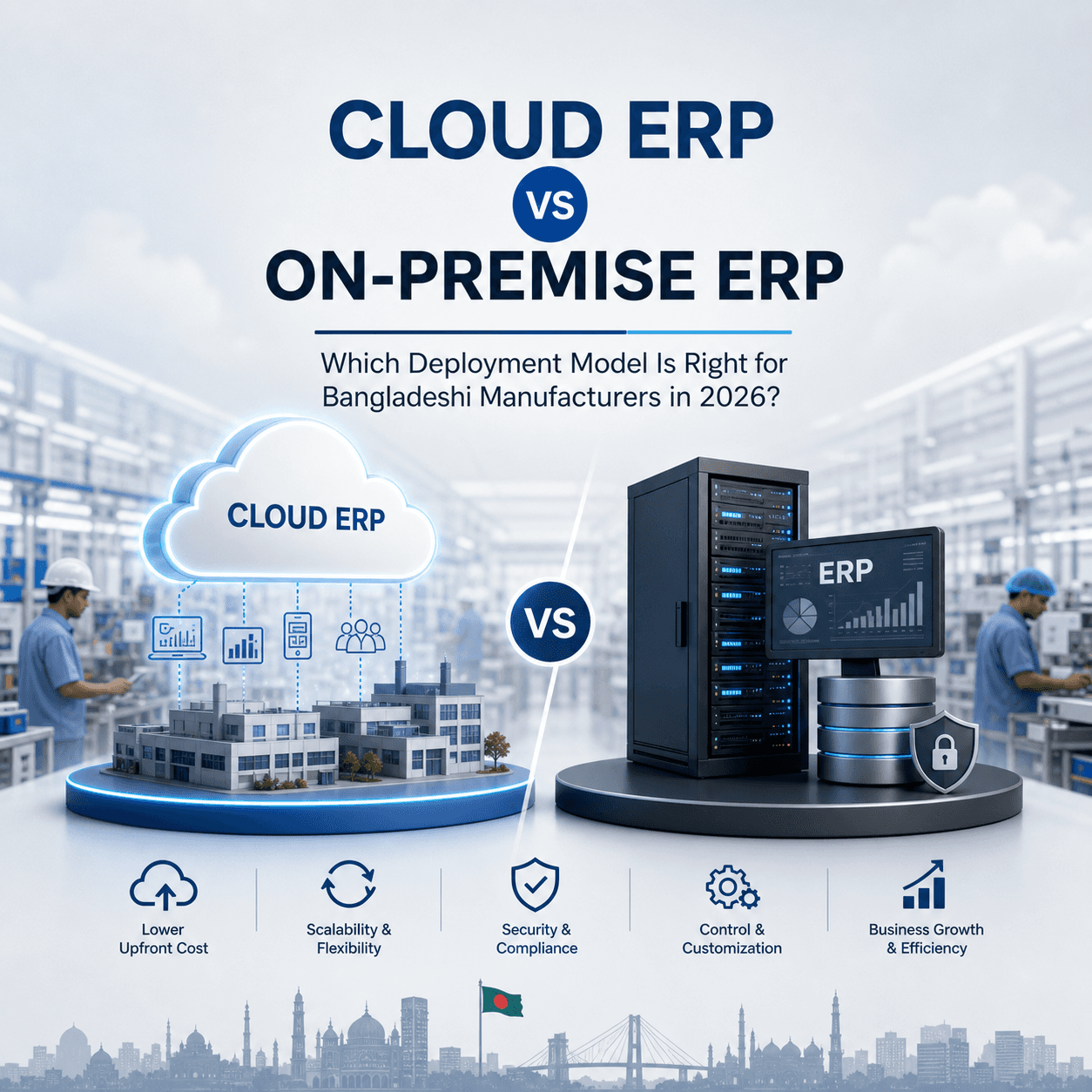
Cloud ERP vs. on-premise ERP
Cloud ERP means your ERP runs on servers managed by the ERP provider or a cloud platform, and your users access it over the internet. This is why you’ll hear terms like “cloud-based ERP Bangladesh” or “cloud ERP Bangladesh.” Updates, backups, and infrastructure are typically handled by the vendor.
On-premise ERP means the ERP is installed on your own servers at your office or factory. Your IT team or your implementation partner manages the server, backups, security patching, and uptime. Some companies prefer it because they feel it gives more control.
There is also a third route that’s growing quickly: hybrid. In a hybrid setup, some workloads are kept locally while other parts use cloud access or cloud backup. In Bangladesh, hybrid can be a practical bridge for manufacturers who want cloud flexibility without fully giving up local control.
What Bangladeshi manufacturers should evaluate (the real checklist)
Most ERP comparisons stop at “cloud is cheaper” or “on-premise is safer.” That’s not enough. For ERP for manufacturing Bangladesh teams, you need to think in workflows: procurement to pay, order to cash, plan to produce, and store to ship.
Here are the decision factors that actually move the needle in 2026.
1) Speed of rollout and change requests
Cloud ERP typically rolls out faster because infrastructure is ready. You can go from ERP demo Bangladesh to live pilot in weeks if your process mapping is clear and your master data is prepared. In on-premise, server procurement, setup, security hardening, VPNs, and backups can add extra steps.
If you’re trying to modernize quickly, cloud ERP Bangladesh 2026 usually wins on time-to-value.
2) Cost structure: CapEx vs OpEx (and what “cost” really means)
Manufacturers often ask about ERP software price in Bangladesh and assume the only variable is license cost. In reality, total cost includes implementation, customization, integrations, training, support, upgrades, and internal time.
Cloud ERP commonly uses subscription pricing. On-premise is commonly a bigger upfront license plus server and IT overhead. But the deciding factor is not just “which is cheaper.” It’s which cost structure matches your cash flow and growth plan.
Also, ERP implementation cost Bangladesh varies wildly based on scope. If you’re implementing MRP, WMS, barcoding, batch/lot tracking, and multi-warehouse, your cost will not be the same as a basic accounting deployment. That’s true for any ERP software company in Bangladesh.
3) Uptime, internet reliability, and factory-floor reality
This is where many Bangladesh conversations become practical. If your factory internet is unstable, a pure cloud ERP can feel risky unless you plan connectivity properly. However, many modern cloud deployments are designed with performance optimization and mobile access in mind, and hybrid approaches can reduce pain.
On-premise can perform consistently inside a local network, but then the burden shifts to your server maintenance and disaster recovery. If the server fails and you do not have a tested backup plan, production stops.
4) Data security and compliance expectations
Some leadership teams feel safer with on-premise because “data is inside our building.” But security depends more on discipline than location. Cloud environments can be extremely secure if configured well, with strong access controls, encryption, and professional monitoring.
A key point for 2026: buyers and auditors increasingly care about access logs, role-based approvals, and traceability. Whether cloud or on-premise, you need granular security and proper workflows.
5) Scalability: new plants, new warehouses, new sales channels
If you plan to add warehouses, launch retail outlets, open new production lines, or expand to multi-country operations, cloud ERP Bangladesh 2026 usually makes scaling simpler. You add users, modules, and locations without buying another server.
For manufacturers comparing manufacturing ERP software Bangladesh options, scalability matters because growth often arrives before your IT team is ready.
6) Integration with existing tools (Tally, SAP, QuickBooks, and more)
Bangladesh businesses rarely start from zero. Many already use accounting tools, POS, or legacy production apps. The best ERP software in Bangladesh is not just “feature rich.” It integrates cleanly.
If you’re comparing ERP system vs accounting software Bangladesh choices, integration is the bridge. A true ERP is not just accounts. It connects inventory, production, procurement, sales, finance, HR, and approvals in one system, while still integrating with tools you must keep.
Cloud ERP: where it shines for Bangladeshi manufacturing in 2026
If we focus specifically on cloud ERP Bangladesh 2026, here’s where cloud typically delivers the most value.
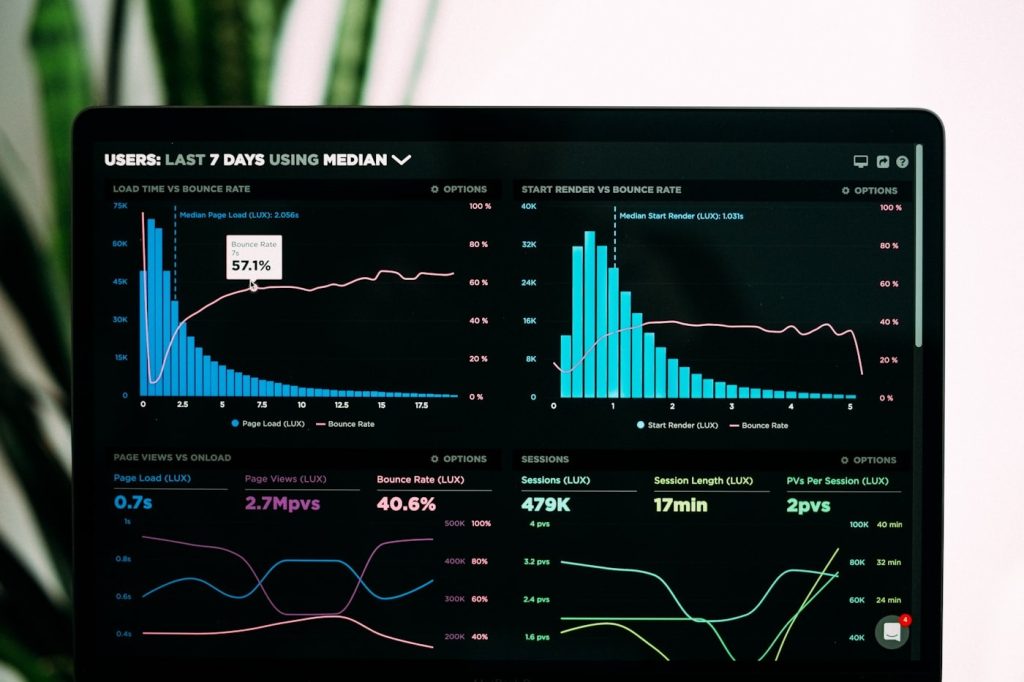
Cloud ERP is usually best when you need faster rollouts, easier scaling, multi-location access, and predictable costs. For owners and directors who travel, cloud also provides real-time dashboards and mobile approvals without needing complex VPN setups.
It’s also a strong fit for companies that want AI ERP software Bangladesh capabilities, because modern AI-driven insights often roll out faster in cloud environments where updates are frequent and data pipelines are standardized.
From an operations point of view, cloud makes it easier to connect warehouses, sales offices, and even remote depots into one inventory picture. If you’re building inventory management software Bangladesh workflows with barcode scanning and approval chains, cloud access can reduce delays and visibility gaps.
Cloud ERP advantages that matter in the factory
Cloud benefits can sound generic, so let’s tie them to factory outcomes: faster purchase approvals, fewer stockouts, better WIP control, accurate finished goods valuation, and faster month-end closing. When cloud is implemented well, you also get cleaner traceability, which is especially important for regulated categories and export-focused production.
In other words, cloud ERP Bangladesh 2026 is not just an IT move. It’s an operational performance move.
On-premise ERP: why some manufacturers still choose it in 2026
On-premise is still a valid choice in Bangladesh, especially for manufacturers with strong internal IT, strict data policies, or plants where internet reliability is not yet dependable.
On-premise ERP can feel more “fixed” and predictable in the factory LAN environment. Some companies also prefer to keep everything under their own control, including database access, server-level configurations, and internal security tooling.
Another reality is that certain manufacturers have already invested in server infrastructure and have an IT team that can manage it well. For them, the economics can still make sense.
That said, the hidden risk is long-term maintenance. Upgrades can be delayed, security patching can be inconsistent, and disaster recovery planning is often weaker than leaders think. So if you choose on-premise, treat server management and backups as a first-class process, not an afterthought.
Hybrid ERP: the practical middle path many Bangladesh teams end up choosing
Hybrid is often what manufacturers actually need when they want the flexibility of cloud ERP Bangladesh 2026 but also want certain systems to remain local.
For example, a company might keep core database services locally for speed inside the plant, while using cloud access for head office reporting, mobile approvals, or secure backups. Hybrid can also help when you’re transitioning from older tools to a modern ERP in phases.
If your growth plan is aggressive but your connectivity is not perfect yet, hybrid may be the smoothest route.
The manufacturing-specific modules that influence your deployment decision
Manufacturing is not just “accounts plus stock.” A real ERP for manufacturing Bangladesh requires depth in planning, production, costing, and warehousing.
Here’s where deployment choice intersects with functional scope. If your ERP will run MRP and WMS heavily, you need to prioritize performance, shop-floor usability, barcode reliability, and uptime.
To keep it readable, here are the key modules that usually decide the outcome:
- MRP and production planning: BOM control, routing, capacity planning, WIP tracking, wastage, and rework management
- WMS and barcoding: bin locations, GRN to put-away, pick/pack/ship, QR/barcode labels, cycle counts, and dispatch controls
This is also where keywords like warehouse management software Bangladesh and warehouse management software Bangladesh become more than search terms. If your warehouse workflows are weak, your ERP ROI will suffer, regardless of cloud or on-premise.
What about RMG, garments, and textile manufacturers?
RMG and textiles have their own ERP realities: style-wise bills of materials, accessories tracking, subcontracting, compliance reporting, export documentation, and high SKU churn. If you’re evaluating the best erp software in Bangladesh for rmg factories, you need an ERP that can handle fast change, detailed material traceability, and complex approvals.
Many teams also search for garments ERP software Bangladesh or RMG ERP software Bangladesh because generic ERPs struggle with apparel workflows. The deployment decision is important here too: cloud ERP Bangladesh 2026 can help multi-unit groups unify reporting and approvals across factories and head office, while on-premise may be preferred by plants that want local performance stability.
And if you’re specifically looking for ERP software for garment manufacturing company in Bangladesh or ERP software for textile in Bangladesh explanation, focus less on labels and more on whether the system supports your real processes: purchase planning by consumption, cutting to sewing to finishing tracking, batch-level inventory, and job work management.
ERP vs accounting software: the confusion that still costs money
A common scenario: a company says they “have ERP,” but they actually mean they have accounting. That’s why ERP system vs accounting software Bangladesh comparisons matter.
Accounting software mainly helps with ledgers, vouchers, and basic reporting. A manufacturing ERP connects that finance layer to inventory valuation, production consumption, real-time stock, purchase workflows, approvals, and profitability by product or customer.
If you want accounting ERP software Bangladesh capabilities, you should still ensure the ERP has strong finance features, but don’t stop there. The value is in integration across departments.
How Focus ERP modular solutions fit into this decision (and why modular matters in 2026)
At Infoex Bangladesh, we work with Focus ERP solutions that are modular by design. That matters because most manufacturers do not need “everything” on day one. They need a practical start and a clean scale-up plan.
Focus 9, Focus X, Focus WMS, Focus MRP, and Focus POS can run as a complete suite or as standalone modules. Many companies begin with Finance, Inventory, HRMS, CRM, or POS, then expand into full manufacturing control. This approach is especially helpful for ERP software for SME Bangladesh buyers who want to reduce risk, manage ERP software cost in Bangladesh, and still grow into enterprise-level capability.
From a deployment perspective, Focus supports flexible cloud, on-premises, or hybrid setups. That means you can align your infrastructure choice with your factory constraints, not the other way around. It also supports role-based approvals, granular security, zero-code workflow creation, real-time dashboards, mobile access, and barcode/QR code generation, which is a big deal for modern warehouse and production environments.
Integration is also a practical win. Many Bangladeshi companies need connectivity with tools like Tally, SAP, and QuickBooks. When you evaluate ERP software used in Bangladesh, check integration strength early, because retrofitting integrations later can inflate ERP implementation cost in Bangladesh significantly.
A realistic way to choose: which model fits which manufacturer?
Instead of debating ideology, match the model to your operating reality.
Cloud ERP Bangladesh 2026 is usually the best fit if you’re scaling locations, want faster rollout, need easy mobile access for management approvals, and prefer predictable subscription costs. It’s also a strong match if you want continuous improvement through frequent updates and modern analytics.
On-premise ERP is often a better fit if you have strong internal IT, need full control over infrastructure, run in environments with unreliable connectivity, or must follow strict internal policies about where data resides.
Hybrid is the practical choice if you want cloud convenience but need local performance stability, or if you’re migrating step-by-step.
If you’re still unsure, the simplest next step is to see a working system in your context. A proper ERP demo Bangladesh should not be generic slides. It should show your workflows: GRN, batch tracking, issue to production, production entry, QC, dispatch, costing, approvals, and management dashboards.
The cost question everyone asks (and the better way to ask it)
“ERP software price in Bangladesh” is a fair question, but it’s incomplete. The better question is: what will this ERP replace, what risks will it reduce, and how quickly will it pay back?
A practical budgeting view includes ERP software cost in Bangladesh plus implementation, training, integrations, data migration, and internal time. It also includes ongoing support. Cloud reduces some infrastructure costs but adds subscription. On-premise increases server and maintenance responsibilities.
So when you compare vendors or the Top ERP software in Bangladesh lists, ask for a transparent breakdown, including ERP implementation cost Bangladesh and what’s included in support. Many disappointing projects fail not because the ERP is weak, but because the scope was unclear.
Final take: what should Bangladeshi manufacturers do in 2026?
In 2026, the best decision is the one that matches your operations and growth plan.
If you’re pushing for speed, unified multi-location visibility, and modern analytics, cloud ERP Bangladesh 2026 is often the smartest route. If your plant needs local reliability and you have strong IT discipline, on-premise can still deliver great results. And if you want both, hybrid is not a compromise. It can be a competitive advantage.
Whichever you choose, the bigger win is choosing ERP software Bangladesh that is modular, scalable, manufacturing-ready, and implemented with process clarity. That is what separates “software installed” from “digital transformation achieved.”
Cloud ERP Bangladesh 2026 is not a trend word. It’s a deployment strategy. Used correctly, it becomes a productivity strategy.
FAQs
1) Is cloud ERP Bangladesh 2026 reliable for factory operations?
Yes, if connectivity planning is done properly. Most issues come from weak network design, not the ERP itself. Hybrid setups also help maintain shop-floor stability with cloud access.
2) What is the difference between an ERP system vs. accounting software Bangladesh companies use?
Accounting software manages finance entries and reporting. ERP connects finance with inventory, production, procurement, approvals, and costing, so departments work on one data set instead of disconnected tools.
3) How do we estimate ERP software price in Bangladesh and ERP implementation cost in Bangladesh?
Start with scope: modules, users, locations, and integrations. Then include data migration, training, customization, and support. A detailed proposal is more useful than a single number.
4) Which deployment model is best for ERP for manufacturing Bangladesh in multi-plant groups?
Cloud ERP Bangladesh 2026 usually fits multi-plant groups because scaling users and locations is easier. Many groups also choose hybrid to keep local plant performance while centralizing reporting.
5) Do garments ERP software Bangladesh or RMG ERP software Bangladesh require special features?
Yes. RMG needs style-wise planning, accessory tracking, subcontracting, compliance reporting, and high SKU change handling. A manufacturing-ready ERP with strong MRP and WMS is important.
6) Can ERP software for SME Bangladesh be modular so we can start small?
Yes. Many modern ERPs are modular, allowing you to begin with finance, inventory, or HRMS and expand later into MRP, WMS, POS, and advanced reporting without redoing the system.
Ready to choose the right ERP deployment for 2026?
At Infoex Bangladesh, we don’t push a one-size-fits-all answer. We help you choose the right deployment model for your factory, your people, and your growth plan, whether that’s cloud ERP Bangladesh 2026, on-premise, or hybrid. If you want a practical, workflow-based ERP demo Bangladesh and a clear roadmap covering modules, timeline, and realistic costs, we’re ready to walk you through it and help you implement it the right way.