



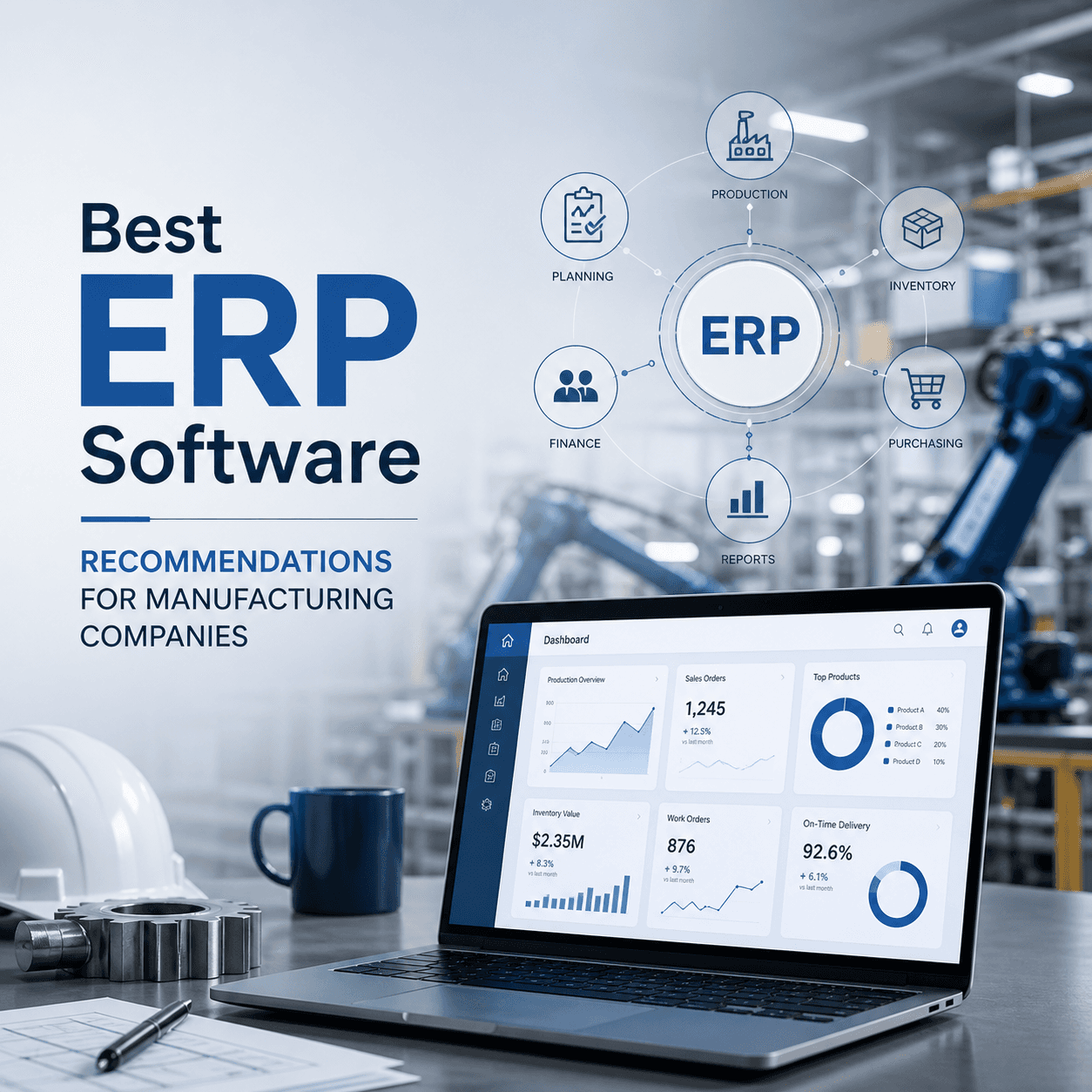
If you are running a factory, you already know the “real” work is not only on the shop floor. It is in planning, purchasing, inventory, production tracking, quality checks, dispatch, and finally making sure finance matches reality. That is exactly why ERP for manufacturing has become less of a “nice-to-have” and more of a survival tool. The right ERP for manufacturing connects your departments, reduces production surprises, and gives you decision-making data before problems turn into losses.
In this guide, I will share practical, field-tested recommendations and what to look for when choosing ERP for manufacturing, especially if you are evaluating options in Bangladesh and want a solution that fits local needs, compliance, and growth.
Why Manufacturing Companies Need ERP (Not Just Accounting Software)
A manufacturing business can look “profitable” in accounting while quietly bleeding money in production. That usually happens when materials are issued without proper traceability, wastage is not recorded, machine downtime is not measured, and finished goods are not matched with actual consumption.
A strong ERP for manufacturing fixes this by putting one system in the middle of everything: BOM, MRP, procurement, inventory, production, subcontracting, quality, maintenance, sales, and finance. When implemented correctly, ERP for manufacturing gives you one version of truth.
In Bangladesh, this matters even more because many manufacturers operate with a mix of manual processes, Excel trackers, and disconnected tools. That is why solutions in the market like ERP software Bangladesh offerings have grown quickly.
What To Look For In ERP For Manufacturing (The Real Checklist)
Before you shortlist any vendor, it helps to get clear on what “good” looks like for your factory. Most disappointment happens when companies buy a generic ERP and then try to force manufacturing workflows into it.
A reliable ERP for manufacturing should cover the essentials first, then scale into advanced features as your operation matures.
Here are the capabilities that matter most in day-to-day production:
- BOM And Routing Control: versions, alternates, revisions, and approvals.
- MRP And Material Planning: shortage reports, reorder logic, lead times, and demand forecasts.
- Shop Floor Tracking: batch/lot tracking, job cards, stage-wise production, WIP visibility.
- Quality Control: incoming QC, in-process QC, finished goods QC, non-conformance and CAPA.
- Inventory And Warehouse: bin locations, barcode scanning, stock aging, GRN/GIN discipline.
- Costing: standard vs actual costing, wastage, overhead allocation, and variance tracking.
- Maintenance: breakdown logs, preventive schedules, and machine utilization.
- Traceability And Compliance: batch genealogy, expiry handling, audit trails, role-based access.
This is also where specialized modules like warehouse management software Bangladesh and inventory management software Bangladesh become important, because manufacturing wins are often hidden inside inventory accuracy and warehouse discipline.
Best ERP Software Recommendations For Manufacturing Companies
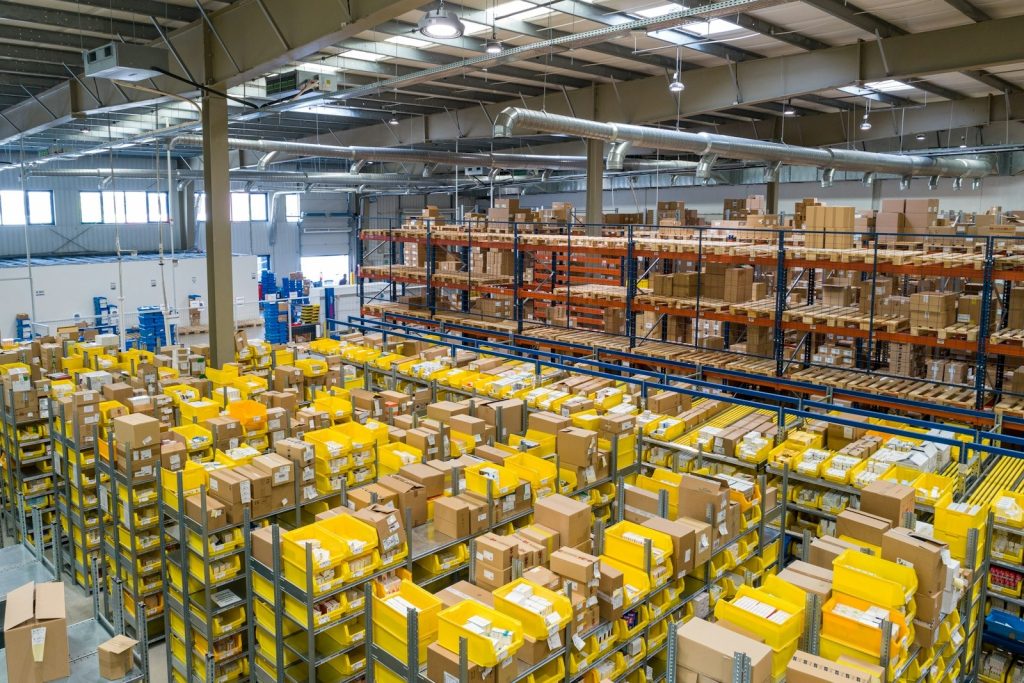
Let’s talk recommendations. I am not listing random global names that look impressive but are painful to implement locally. Instead, this section focuses on options that typically fit manufacturing realities in Bangladesh and similar markets, including modular solutions that can start small and scale.
Focus ERP (Focus 9 / Focus X) For Growing And Complex Manufacturers
If you want a modular, scalable ERP for manufacturing that can start with finance and inventory, then expand into full production planning, Focus ERP is one of the strongest options.
At Infoex Bangladesh, we work as a certified partner and distributor of Focus ERP, and what makes Focus stand out is its modular architecture and the speed at which businesses can roll out workflows without heavy coding.
Focus solutions like Focus 9 and Focus X are built to support manufacturers that are scaling, managing multiple units, or juggling complex approvals. It also supports cloud, on-premises, and hybrid deployment, which is very useful if you are comparing cloud ERP Bangladesh options versus keeping sensitive data in-house.
Key highlights that manufacturing companies actually use include real-time dashboards, mobile access, barcode/QR generation, role-based approvals, granular security, and integration support with tools like Tally, SAP, and QuickBooks. If you care about long-term scalability, Focus is a serious manufacturing ERP software Bangladesh contender.
Focus MRP And Focus WMS For Production Planning + Warehouse Control
Many factories do not need to “change everything” on day one. They need immediate control over planning and inventory. That is where Focus MRP and Focus WMS can be valuable.
A dedicated MRP layer tightens the link between sales demand, production plans, and procurement. On the other side, WMS improves bin-level discipline, picking accuracy, and dispatch control. Together, they support ERP for manufacturing execution where most money is won or lost: material movement and production schedules.
If your warehouse is large, multi-location, or barcode-driven, a WMS is not optional anymore. This is especially relevant if you are actively searching for warehouse management software Bangladesh that connects directly to ERP rather than living as a separate app.
Farvision ERP For Project-Heavy And Engineering-Led Manufacturing
Some manufacturers operate like a hybrid between production and projects. Think of engineering-led firms, customized production, or businesses where each order has unique specs and documentation. In these cases, you want an ERP that can handle tighter project tracking, costing, and execution controls.
Farvision ERP is commonly considered for businesses that need structured workflows and strong operational tracking. When evaluating ERP for manufacturing, this can be a good fit if your manufacturing resembles “project manufacturing” rather than repetitive mass production.
Impact+ ERP For Practical Operations And Fast Adoption
If your biggest concern is adoption, simplicity, and quick wins in everyday processes, Impact+ ERP can be a practical choice. Many manufacturers fail at ERP not because the software is weak, but because teams avoid it when screens feel complicated and workflows feel forced.
For factories that want to digitize step by step, Impact+ can be evaluated as part of the ERP software Bangladesh landscape. The goal is not “most features.” The goal is consistent daily usage across stores, production, and accounts.
Industry-Specific ERP Choices For Garments And Apparel Manufacturing
Bangladesh has a massive garments ecosystem, so it deserves its own mention. If you are in RMG, knitting, dyeing, printing, washing, or accessories, you will likely need specialized capabilities like style-wise BOMs, size/color matrices, production line efficiency, subcontracting, and shipment compliance.
That is where searching for garments ERP software Bangladesh or even the best garments erp software in Bangladesh becomes relevant. The best approach is to shortlist systems that can support your exact process flow: sampling to bulk, trim management, production planning, and commercial exports documentation.
Even if you pick a general ERP for manufacturing, make sure it can be configured for garments workflows through strong customization and approvals. This is one reason modular platforms can be a good fit, because they can be shaped around the factory’s real operations.
How To Choose The Best ERP For Manufacturing In Bangladesh
Choosing ERP for manufacturing is less about the brand name and more about fit, implementation quality, and support. In Bangladesh, companies often compare options based on price first, then discover hidden costs later through customization, training gaps, and rework.
Here is the approach that typically leads to a better decision.
Start by writing down your manufacturing flow as it exists today. Where does information get lost? Where do approvals get delayed? Where does inventory mismatch happen? Then map your must-haves: MRP, batch tracking, multi-warehouse, QC, preventive maintenance, or subcontracting.
After that, shortlist vendors that can prove they have implemented in similar manufacturing environments. If a vendor cannot show you a live demo close to your industry, treat it as a risk. Many buyers now ask for an ERP demo Bangladesh session with realistic scenarios, not pre-scripted slides.
Also, do not ignore deployment. Some manufacturers prefer cloud ERP Bangladesh for speed and accessibility, while others choose on-prem for compliance or internal IT policy. A hybrid option can be a practical middle ground.
Finally, ask directly about integration. If you already use Tally, SAP, or QuickBooks in any unit, or if you run a POS, you want to confirm integration possibilities early. Otherwise, you risk building manual bridges again, which defeats the point of ERP for manufacturing.
ERP Software Price In Bangladesh: What It Really Depends On
People often search “ERP software price in Bangladesh” expecting one number. In reality, pricing depends on scope, modules, users, deployment, customization, and implementation.
For most manufacturers, the “software license” is only one part. The bigger variable is services: business analysis, configuration, training, data migration, and go-live support. That is why you also see buyers asking about ERP implementation cost Bangladesh.
A practical way to estimate cost is to define phases. For example, Phase 1 might include Finance, Inventory, Purchase, Sales, and basic Production. Phase 2 adds MRP, QC, Maintenance, and WMS. This staged rollout often reduces risk and helps users adopt ERP for manufacturing with less resistance.
If you are an SME, there are also solutions positioned as ERP software for SME Bangladesh, typically focused on faster implementation and essential controls, with room to scale when the factory grows.

Common ERP Implementation Mistakes Manufacturing Companies Should Avoid
Most ERP failures are predictable. The good news is you can avoid them with a few disciplined decisions.
The first mistake is trying to automate a broken process. ERP for manufacturing will not magically fix unclear BOMs, undocumented wastage, or inconsistent GRN practices. It will simply expose the mess faster.
The second mistake is underestimating master data. Your item codes, units, BOM structure, warehouse bins, supplier lists, and chart of accounts must be cleaned. If master data is messy, the ERP output will be messy too.
The third mistake is skipping shop floor involvement. Production supervisors, storekeepers, and QC teams need to be part of requirement discussions, training, and UAT. If ERP becomes “an accounts project,” manufacturing execution suffers.
And finally, do not let the project become endless customization. Choose an ERP for manufacturing that covers most needs out of the box, then customize only where it gives real competitive advantage.
A Quick Note On “Top 10 ERP Software In Bangladesh” Lists
You will see many articles claiming the top 10 erp software in Bangladesh, but most lists are either paid placements or too generic. What matters is whether the system supports your manufacturing reality: planning logic, inventory discipline, traceability, and costing depth.
A better approach is to build a shortlist, request an ERP demo Bangladesh, and validate using your own scenarios. For example, test a real production order with shortages, substitutions, rework, QC rejection, and partial dispatch. If the system handles that smoothly, you are closer to the right ERP for manufacturing choice.
Why Modular ERP Matters For Manufacturing Growth
One of the most practical lessons in manufacturing digital transformation is this: you do not need to implement everything at once, but you do need a platform that can scale when you are ready.
Modular systems like Focus (with Focus 9, Focus X, Focus WMS, Focus MRP, Focus POS) allow a company to start with Finance, HRMS, CRM, Inventory, or POS, then expand into full enterprise control. This is especially useful when a business is growing from a single factory into multiple units, new distribution channels, or even multi-country operations.
If you are looking for the best ERP software in Bangladesh with long runway for manufacturing scale, modularity, security controls, approvals, and integration options become major decision factors.
FAQs
What Is ERP For Manufacturing And Why Is It Important?
ERP for manufacturing connects planning, production, inventory, quality, purchasing, and finance in one system. It reduces errors, improves traceability, and helps factories control cost, wastage, and on-time delivery.
How Do I Choose The Right ERP Software Company In Bangladesh?
Look for an ERP software company in Bangladesh with proven manufacturing implementations, strong training and support, realistic demos, and clear pricing. The best partner understands your process and reduces customization risk.
What Is The Typical ERP Implementation Cost Bangladesh Manufacturers Should Expect?
ERP implementation cost Bangladesh depends on modules, users, deployment type, data migration, training, and customization. Most factories succeed by rolling out in phases, starting with finance, inventory, and production basics.
Is Cloud ERP Bangladesh A Good Option For Factories?
Cloud ERP Bangladesh is great for faster deployment, easier remote access, and lower infrastructure overhead. For factories with security or compliance needs, hybrid deployment can offer the best of both worlds.
Can ERP Handle Garments And Apparel Manufacturing In Bangladesh?
Yes, but you must confirm workflows like style-wise BOM, size/color variants, line production tracking, subcontracting, and shipment documentation. Many companies shortlist garments ERP software Bangladesh based on these requirements.
Do I Need Separate Warehouse Management Software Bangladesh If I Have ERP?
Not always. If your ERP includes WMS features like bin tracking, barcode scanning, picking, and dispatch control, you can manage it inside one system. Otherwise, integrated WMS is recommended for accuracy.
Get Started with Infoex Bangladesh
If you are serious about implementing ERP for manufacturing without turning it into a never-ending IT project, we can help. At Infoex Bangladesh, we guide you from requirement mapping to a realistic demo, clean implementation, and scalable rollout using proven ERP platforms. If you want, we will schedule an ERP demo Bangladesh and show your real factory scenarios inside the system, so you can decide with confidence.