



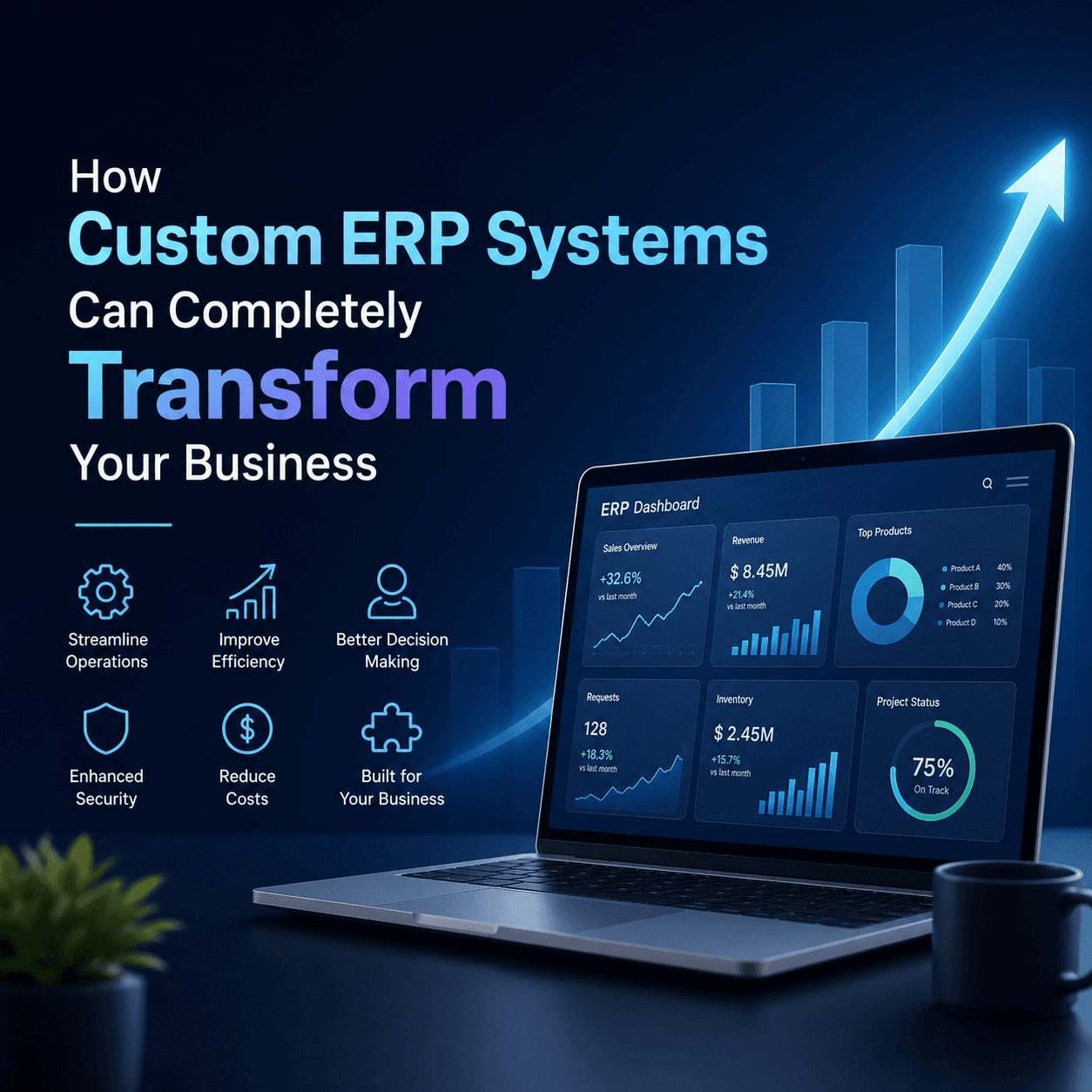
If your business is growing, chances are your tools are not keeping up. You might be juggling spreadsheets, disconnected apps, manual approvals, and reports that arrive too late to be useful. This is exactly where Custom ERP systems change the game. Done right, Custom ERP systems unify your operations, remove friction between teams, and give leadership real visibility into what’s happening across the company in real time.
The big shift is not just “having an ERP.” It’s having software that fits how you actually run your business. That’s why Custom ERP systems can feel like switching from driving with a foggy windshield to a full digital dashboard. You stop reacting late and start managing proactively.
Why Most Businesses Hit A Wall With Generic Software
Most businesses begin with simple tools. A payroll app here, inventory in Excel there, a POS system that does not talk to accounting, and a CRM that only sales uses. It works until it doesn’t.
The “wall” usually shows up as duplicate data entry, inconsistent numbers between departments, approval delays, stock-outs despite having stock, and month-end closing that takes forever. In many cases, the cost is not the software subscription. The real cost is the hidden waste in time, errors, missed revenue, and decision-making based on outdated data.
Custom ERP systems solve this because they are designed around your workflows instead of forcing your team to work around the software. That alignment is what makes transformation possible.
What “Custom” Actually Means In Custom ERP Systems

A common misconception is that customization means building everything from scratch. In reality, Custom ERP systems, which are a type of ERP system, can be built on modular platforms, where you start with what you need and extend as the business evolves.
Customization typically includes things like adapting workflows, role-based approvals, dashboards, reports, integrations, security rules, and industry-specific processes. For example, a manufacturer may need batch tracking, BOM workflows, MRP planning, and shop-floor visibility. A retailer may care more about POS, promotions, barcode flows, and multi-branch inventory.
The core idea is simple: Custom ERP systems should mirror your business model, not fight it.
The Real Business Transformations You Get With Custom ERP Systems
When companies invest in Custom ERP systems, the outcomes are usually bigger than expected because improvements compound across departments. Here’s what the transformation often looks like in practical terms.
You Get One Source Of Truth Across The Company
When sales, finance, procurement, inventory, production, and management work from different systems, you get different answers to the same question. A unified ERP replaces the confusion with one consistent data source.
With Custom ERP systems, the same transaction flows across modules automatically. A sales order can affect inventory, production planning, dispatch, invoicing, and receivables without multiple re-entry. This reduces errors and speeds up execution.
Your Workflows Become Faster And More Controlled
Approvals, exceptions, and internal controls are where many businesses lose time. A purchase request gets stuck in email. A credit note sits waiting for someone’s confirmation. A stock adjustment happens without audit visibility.
Strong Custom ERP systems bring approvals and controls into a single workflow. With role-based approvals and granular security, you can move faster while staying compliant.
Your Reporting Stops Being A Monthly Surprise
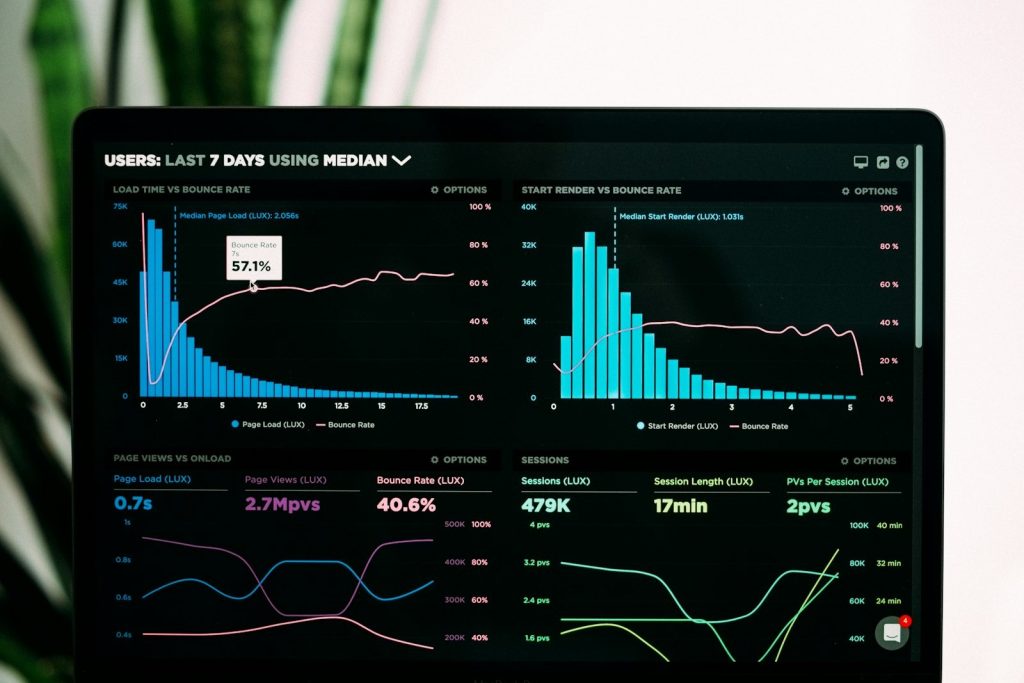
If reporting is slow, leadership manages on assumptions. The shift happens when dashboards update in real time and teams can drill down instantly.
Modern Custom ERP systems can offer real-time dashboards, AI-driven insights, and mobile access so decision-makers see what matters, when it matters. This is especially powerful for fast-moving operations such as retail, distribution, and manufacturing.
Manufacturing And Operations Become Predictable, Not Reactive
In manufacturing, small planning mistakes turn into major cost overruns. Material shortages, wrong scheduling, last-minute overtime, and quality issues can snowball quickly.
With Custom ERP systems, manufacturers can connect MRP, inventory, procurement, production, and quality processes in one operational loop. That means better demand planning, smarter purchasing, and fewer last-minute surprises.
Retail And Distribution Gain Real-Time Inventory Confidence
For retail and distribution, the biggest pain often is inventory accuracy across branches and warehouses. The transformation happens when inventory moves are tracked properly, barcode and QR code workflows are built into daily operations, and POS is connected to finance.
When Custom ERP systems include POS and WMS capabilities, businesses can reduce stock mismatches, speed up billing, track returns accurately, and see profitability per branch, per product, and per period.
A Practical Look At Modular ERP: Start Small, Scale Fast
One of the smartest approaches to ERP is modular adoption. Instead of doing “everything at once,” you can start with the modules that remove the most pain right now, then expand.
At Infoex Bangladesh, we work with modular solutions such as Focus 9, Focus X, and Focus WMS, along with Focus MRP and Focus POS. These modular tools are a strong match for businesses that want Custom ERP systems without overcomplicating the first phase.
You can start with Finance, HRMS, CRM, Inventory, or POS, and then scale into a complete enterprise system as you grow. This approach reduces risk, speeds up time-to-value, and keeps the project aligned to real priorities.
Integration Is Where Many ERP Projects Win Or Lose

Even a great ERP can feel limited if it cannot connect with the tools you already use. Many organizations rely on existing accounting systems, legacy tools, or third-party platforms that still matter.
That’s why integration is a core ingredient in successful Custom ERP systems. When your ERP integrates with tools like Tally, SAP, and QuickBooks, you can avoid disruptive rip-and-replace transitions and still modernize your operations.
Integration also matters for practical workflows: payment gateways, banking, eCommerce, courier services, attendance devices, and other industry-specific tools. When systems talk to each other, the business moves as one.
Custom ERP Systems Help You Scale Without Chaos
Growth is exciting, but it exposes weak processes quickly. New branches, new product lines, new warehouses, multi-company groups, and multi-country operations create complexity that basic software cannot handle.
Well-designed Custom ERP systems support scaling in three important ways. First, they handle multi-company and multi-location operations with proper controls. Second, they allow flexible deployment options including cloud, on-premises, or hybrid. Third, they preserve performance and reporting even as data volume grows.
This is one reason modular, scalable ERP architectures are so valuable for complex manufacturing and fast-growing enterprises.
What “Digital Transformation” Looks Like Day To Day
Digital transformation sounds like a big slogan until you see the small daily wins. With Custom ERP systems, transformation often shows up like this.
A manager approves a purchase request from mobile while traveling. The warehouse team uses barcode scanning to receive goods and update stock instantly. Finance closes books faster because postings are automated. Sales checks live inventory before committing delivery dates. Leadership reviews profitability dashboards without waiting for manual reports.
These are not flashy features. They are operational upgrades that make the business calmer, faster, and more confident.
The Security And Control Layer Most Companies Underestimate
As soon as you centralize operations, you must control access properly. Not everyone should see salaries. Not everyone should be able to edit pricing. Not everyone should approve discounts or change inventory valuation settings.
Strong Custom ERP systems bring granular security, role-based access, approval hierarchies, and audit trails into daily use. That reduces internal risk while making responsibilities clearer across teams.
A Simple Framework For Planning A Successful ERP Rollout
ERP projects succeed when the approach is practical. You do not need a 12-month blueprint to start, but you do need clarity. If you’re planning Custom ERP systems, focus on these essentials:
- Define outcomes first: faster closing, fewer stock-outs, better production planning, cleaner approvals, improved branch visibility.
- Adopt modularly: implement the highest impact modules first, then expand.
- Invest in change management: process alignment, training, and ownership matter as much as software.
This keeps implementation grounded and ensures you get value early.
Why Focus-Based Modular ERP Works Well For Custom ERP Systems
In many real businesses, a modular ERP like Focus can be a practical foundation for Custom ERP systems because it supports customization without forcing heavy development for every adjustment.
Features such as zero-code workflow creation, role-based approvals, integration readiness, AI-driven insights, mobile access, and barcode or QR code generation create a flexible base. Add flexible deployment models and you have a platform that can fit both mid-sized companies and large multi-country groups.
For organizations that want a system that can start simple and grow into a full enterprise backbone, this modular approach is often the best balance of speed and depth.
The Bottom Line

The real power of Custom ERP systems is that they change how your business runs. They reduce friction between departments, make performance measurable in real time, and turn scattered processes into a single operating system.
If you feel like your business is moving fast but your management systems are moving slow, it may be time to stop patching and start transforming. With the right strategy and the right partner, Custom ERP systems can become one of the highest ROI decisions you make.
FAQs
What Makes Custom ERP Systems Different From Regular ERP?
Custom ERP systems are tailored to your workflows, approvals, reports, and integrations. Instead of forcing your team to adapt, the ERP adapts to your business so execution becomes faster, cleaner, and more scalable.
How Long Does It Take To Implement Custom ERP Systems?
Implementation time depends on modules, integrations, and process complexity. Many companies start with core functions like finance or inventory, then expand in phases to reduce risk and get value sooner.
Can We Start With A Few Modules And Expand Later?
Yes. Custom ERP systems are often modular, letting you begin with Finance, HRMS, CRM, Inventory, WMS, MRP, or POS, then scale into a complete enterprise system as requirements grow.
Do Custom ERP Systems Support Cloud Or On-Premises Deployment?
Most modern custom ERP systems support cloud, on-premises, or hybrid deployment. The best choice depends on security needs, connectivity, compliance, cost, and how distributed your operations are.
Will Custom ERP Systems Integrate With Our Existing Tools?
In many cases, yes. Custom ERP systems can integrate with tools like Tally, SAP, and QuickBooks, plus industry tools such as barcode devices, eCommerce platforms, and logistics systems depending on your setup.
Get Started With Infoex Bangladesh
If you’re serious about simplifying operations and scaling with confidence, we can help. At Infoex Bangladesh, we implement modular, scalable Custom ERP systems using Focus ERP solutions and align them tightly with your processes, reporting needs, and growth plans. If you want a clear roadmap, a practical rollout, and a system your teams actually use, let’s talk and transform your ERP into a real business advantage.