



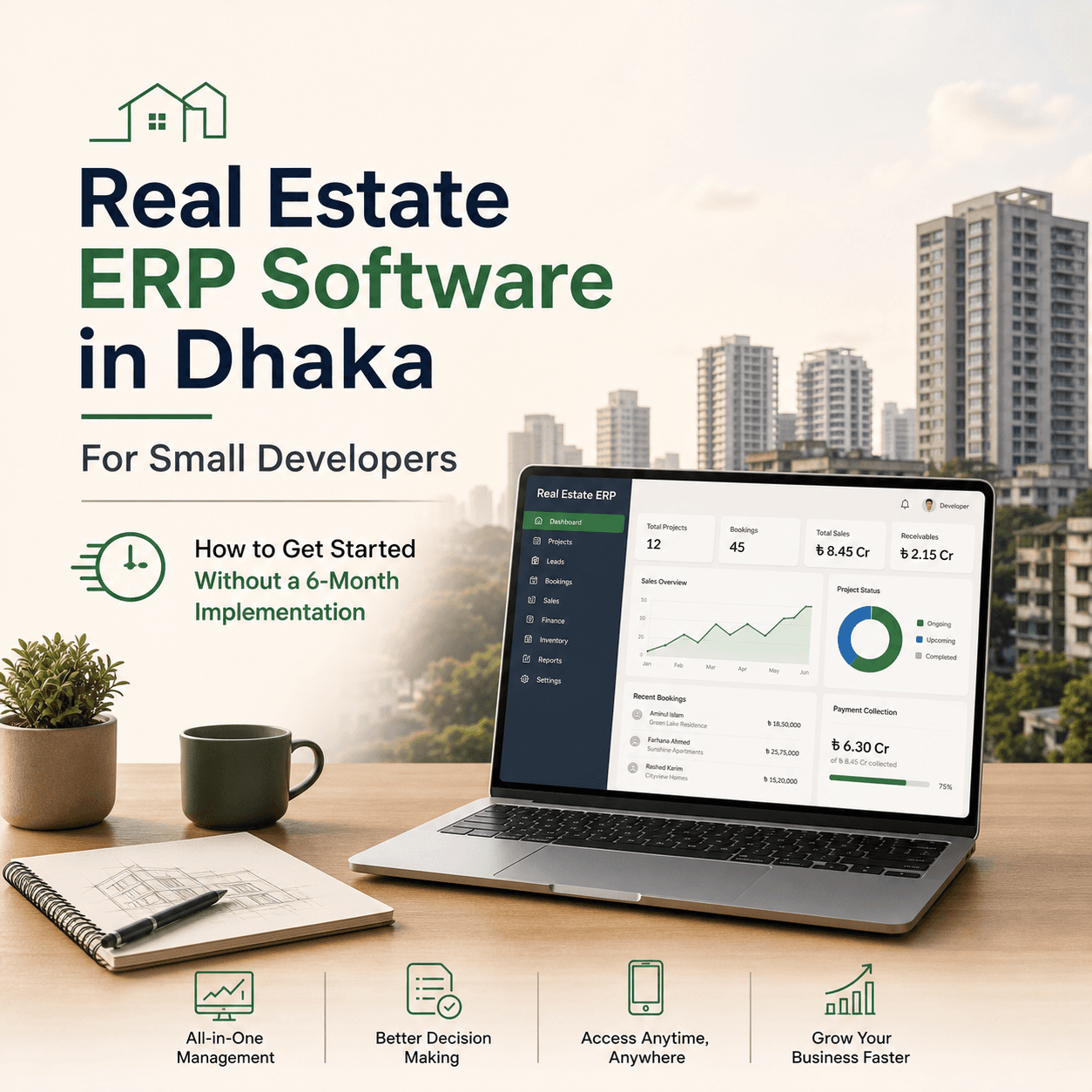
If you’re a small real estate developer in Dhaka, you’ve probably heard the pitch: “Implement an Real Estate ERP software, and everything becomes organized.” Then someone mentions timelines, consultants, and a long rollout, and you quietly decide to stick with Excel, WhatsApp, and a few separate apps.
Here’s the truth: you can start using Real Estate ERP Software in a practical way without signing up for a 6-month implementation marathon. In fact, the fastest wins usually come from launching a few high-impact modules first, tightening approvals and reporting, and only then expanding. This article will show you exactly how to approach Real Estate ERP Software step-by-step in Dhaka, especially if you’re trying to stay lean, control ERP implementation cost Bangladesh, and still operate like a serious business.
Why Small Developers In Dhaka Struggle With ERP (And Why It Doesn’t Have To Be That Way)

Small developers typically don’t fail at ERP because they “don’t understand tech.” They fail because they try to implement everything at once: finance, procurement, inventory, project controls, CRM, HR, payroll, document management, approvals, dashboards, mobile access, and sometimes even POS style billing for collections.
That approach is heavy even for big companies. For small teams, it becomes a bottleneck. People revert back to spreadsheets, and management loses trust in the system.
A better approach is modular. Think “start small, go live fast, expand safely.” This is where solution providers come into play. They offer tailored solutions that allow for gradual implementation of Real Estate ERP Software, making it easier for small businesses to adapt without overwhelming their systems. That’s how modern Real Estate ERP Software should be adopted, and it is also how many ERP software Bangladesh buyers are now evaluating solutions.
What “6-Month Implementation” Usually Means (So You Can Avoid It)
Long implementations usually come from three things: unclear scope, too much customization, and messy master data.
The fastest way to avoid a dragged-out rollout is to define your first phase as a tight, business-critical scope. For most Dhaka-based developers, Phase 1 can be just finance and collections, plus basic project cost tracking. That’s it.
When a vendor tries to sell you a “complete digital transformation” plan on day one, ask a simple question: “Can we go live in 2 to 4 weeks with a minimum viable setup?” If the answer is no, you’re likely heading toward the long route.
What Real Estate ERP Software Actually Covers For A Small Developer
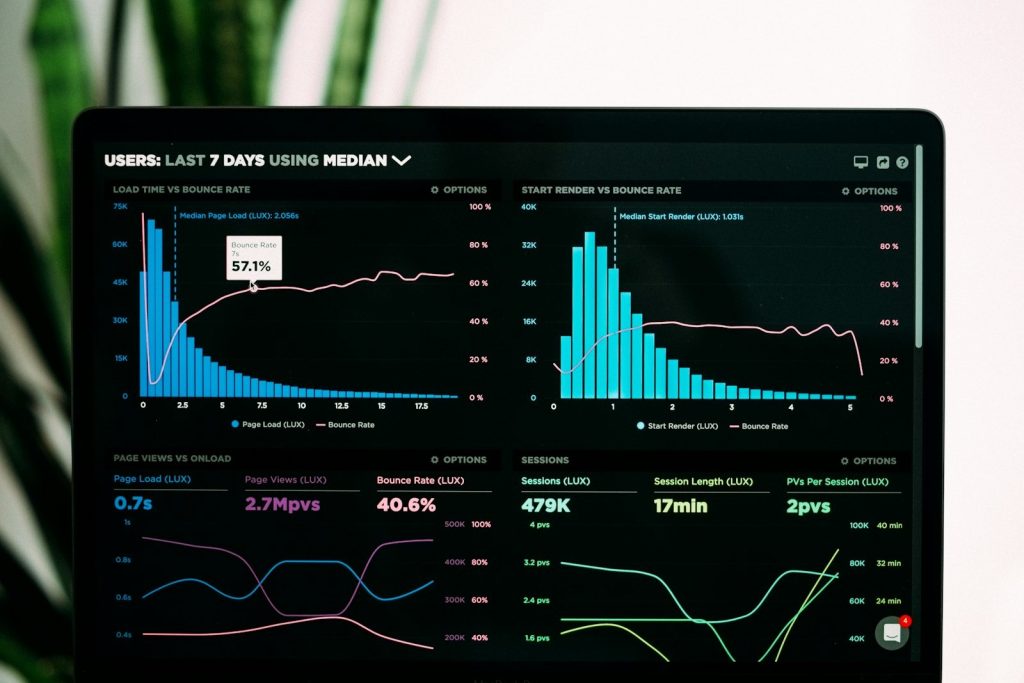
A good Real Estate ERP Software setup ties your business into one controlled flow: leads, bookings, customer communications, installment schedules, receipts, supplier bills, project costs, approvals, and management reports.
In Dhaka, the most common pain points are predictable. Collections get delayed because reminders are manual. Project costs become unclear because bills are scattered. Inventory items like tiles, fittings, cables, cement, and sanitary parts are tracked in notebooks or Excel. Approvals happen over phone calls with no audit trail. And when the time comes to make decisions, reports are late or inconsistent.
This is where a modular ERP approach helps. You don’t need everything at once. You need the “highest-leverage” pieces first.
The “Start In Weeks” Blueprint For Real Estate ERP Software
Below is the rollout path we’ve seen work best when a small developer wants speed without chaos. It keeps ERP implementation cost Bangladesh under control, reduces training burden, and still creates visible results fast.
Phase 1 (Week 1–2): Finance + Collections + Basic Project Cost Centers
Start with the numbers, because finance is where ERP creates immediate clarity.
In Phase 1, your Real Estate ERP Software should handle customer receipts, payment modes, bank and cash controls, voucher entries, supplier payments, and simple cost center mapping by project or building. If you currently use Tally or QuickBooks, integration matters. Many modern ERP systems support integration options with tools like Tally, SAP, and QuickBooks, which can make switching smoother instead of disruptive.
For Dhaka developers, even a basic setup here can stop leakage and create daily visibility. You’ll know what’s collected, what’s due, and what each project is actually costing.
Phase 2 (Week 2–4): CRM + Booking + Installment Schedules
Next, connect your front office to your accounts. This is where Real Estate ERP Software becomes a revenue protection system.
You want leads, customer profiles, unit booking details, pricing, discounts, installment plans, and automated reminders connected to collections. It’s not about fancy CRM features. It’s about building a clean process so that sales promises, customer commitments, and accounts receivable stay aligned.
If you do this right, you’ll reduce disputes, late follow-ups, and “missing history” when a sales rep leaves or changes.
Phase 3 (Month 2): Procurement + Inventory
This is where many developers feel the pain: materials move fast, bills come later, and nobody can confidently answer, “How much stock do we have, and where is it?”
Adding inventory and procurement into Real Estate ERP Software allows you to standardize purchase requests, vendor comparisons, PO approvals, GRN entries, and consumption posting.
If your organization needs a stronger stock layer, it helps to look at solutions that also support inventory management software Bangladesh requirements, along with barcode or QR code flows.
Phase 4 (Month 3): Warehouse + Site Transfers + Barcode/QR
If you manage multiple sites or store yards, you’ll quickly benefit from warehouse workflows. This is where warehouse management software Bangladesh functionality overlaps with ERP.
Warehouse receipts, issues, transfers, bin locations, batch tracking, and barcode scanning reduce “site confusion,” especially when multiple buildings run in parallel.
Some ERP ecosystems also provide dedicated modules such as WMS. If you’re evaluating cloud ERP Bangladesh options, check whether mobile access and barcode support are included, because that’s what makes warehouse control realistic in the field.
Phase 5 (Month 4+): HRMS + Payroll + Role-Based Approvals + Dashboards
Only after the money, customers, and materials are stable should you expand into HRMS, payroll, and deeper workflows. At that stage, you’ll also benefit from role-based approvals, granular security, and real-time dashboards.
This is also when AI-driven insights can actually help, because your data will finally be structured enough to produce meaningful trends.
The Module-First ERP Approach
In the Bangladesh market, one of the smartest shifts is that ERP no longer has to be “all or nothing.” Modern modular solutions let you start with Finance, HRMS, CRM, Inventory, or POS and then scale.
This is especially important for teams looking for ERP software for SME Bangladesh. A small developer doesn’t need an enterprise-sized project plan. They need a reliable system that scales.
If you’re comparing vendors and reading lists like “top 10 erp software in Bangladesh,” don’t just compare brand names. Compare rollout flexibility. The best ERP for you is the one that can go live in phases without breaking operations.
Cloud Vs On-Premises In Dhaka: What Small Developers Should Choose

Most small developers in Dhaka lean toward cloud because it’s faster to start, easier to access, and reduces server management.
A good cloud ERP Bangladesh setup works well if you have teams across site and office, and you want mobile access for approvals and collections. On-premises can still make sense if you have strict internal policies, custom network setups, or you prefer full local control.
Many modern ERP vendors offer cloud, on-premises, or hybrid deployment options. If you want speed, cloud is usually the easiest way to start your Real Estate ERP Software journey without delays.
However, it’s essential to consider the advantages and disadvantages of each option. For a deeper understanding of these aspects, refer to this insightful piece on the advantages and disadvantages of Enterprise Resource Planning.
How To Keep ERP Implementation Cost Bangladesh Under Control
The best way to control cost is not negotiating harder. It’s implementing smarter.
Keep the first scope tight. Use standard workflows first. Avoid heavy customization early. Make approvals simple. Clean your masters once. Train a few key users deeply instead of training everyone lightly.
Here are the only places where a short bullet list genuinely helps, because these are the common cost multipliers that quietly extend timelines:
- Too many custom reports on day one
- Trying to migrate years of messy data immediately
- Redesigning every workflow before going live
- Not assigning a single internal owner who can decide quickly
When you do modular rollouts, ERP software price in Bangladesh becomes easier to justify because the system starts paying back earlier. That’s the difference between “ERP as a cost” and Real Estate ERP Software as an operational upgrade.
A Practical Checklist Before You Request An ERP Demo In Dhaka
Before booking an ERP demo Bangladesh, prepare a short, real checklist. Not a fantasy wish list. Pick 10 daily actions that matter to your team.
For a small developer, those actions typically include: recording receipts, tracking due installments, generating a customer statement, posting supplier bills, approving a payment, seeing project-wise cost totals, raising a purchase request, issuing items to a site, and checking stock availability.
If a vendor can show these clearly, without hand-waving, you’re on the right track.
Where Infoex Bangladesh Fits In
At Infoex Bangladesh, we simplify enterprise management through next-generation ERP software solutions that align technology with business goals. We are a certified partner and distributor of Focus ERP, Farvision ERP, and Impact+ ERP systems.
In plain terms, we prefer a modular, realistic rollout that fits how Dhaka businesses actually operate. Solutions like Focus 9 and other modular options such as Focus X, Focus WMS, Focus MRP, and Focus POS can be used as a complete system or as standalone modules, depending on what you need today.
That matters because Real Estate ERP Software is rarely just “one department.” You might start with Finance and CRM now, then add Inventory, then Warehouse, and later HRMS and approvals. With modular architecture, you don’t throw away your setup. You build on it.
The other big benefit is integration and control. Strong integration capabilities with tools like Tally, SAP, and QuickBooks can reduce friction. Features like zero-code workflow creation, role-based approvals, granular security, real-time dashboards, mobile access, barcode or QR code generation, and AI-driven insights help teams stay consistent without turning the ERP into a complicated science project.
What About Manufacturing ERP Keywords
You may wonder why people keep searching terms like ERP for manufacturing Bangladesh, manufacturing ERP software Bangladesh, or even garments ERP software Bangladesh and best garments erp software in Bangladesh when you’re in real estate.
It’s because many robust ERPs built for manufacturing are excellent at handling complex procurement, inventory, approvals, and multi-location control. A developer’s material flow can look a lot like a light manufacturing supply chain: purchase, receive, store, issue, consume, track cost, and report.
So when you see an ERP that’s proven in ERP for manufacturing Bangladesh environments, it can be a good sign for durability and scalability. The key is configuring it properly for Real Estate ERP Software workflows.
How To Choose The Best ERP Software In Bangladesh For A Small Developer
There are many options in the market, and every ERP software company in Bangladesh will claim they’re the best. The “best ERP software in Bangladesh” for you is the one that matches your rollout style, supports your approvals, and gives you reporting without delays.
When evaluating Real Estate ERP Software, focus on these practical questions. Can it start with a few modules? Can it handle project-wise costing properly? Can it manage customer installment schedules and receipts cleanly? Can it scale into inventory and warehouse later? Can you control access by role so collections, accounts, and management don’t step on each other?
If the answer is yes, you can start fast, stabilize, and scale.
A Realistic “First 30 Days” Plan

In the first month, your goal is not perfection. Your goal is adoption and control.
Week one should be setup and masters. Week two should be transactions for a limited scope. Week three is training plus corrections. Week four is daily usage plus management reporting.
By the end of 30 days, your Real Estate ERP Software should produce at least three things without manual effort: a collections snapshot, a customer due list, and a project-wise cost summary. If you have those, you’ve already escaped the spreadsheet trap.
Let’s Wrap Up: Start Small, Go Live Fast, Scale Confidently
If you’re a small developer in Dhaka, you don’t need a long, risky ERP journey to become organized. You need a modular plan that delivers quick wins, keeps your team comfortable, and expands only when the foundation is stable.
Used the right way, Real Estate ERP Software becomes your control center for collections, costs, procurement, inventory, approvals, and reporting. And when you keep scope tight, prioritize adoption, and choose scalable modules, you can go live in weeks, not six months.
Frequently Asked Questions
What Is The Fastest Way To Start Real Estate ERP Software In Dhaka?
Start with Finance and Collections first, then add CRM and installment schedules. A modular rollout reduces training load, keeps scope clear, and helps you go live in weeks instead of months.
How Much Is ERP Software Price In Bangladesh For Small Developers?
ERP software price in Bangladesh depends on modules, users, deployment type, and support scope. Starting with limited modules lowers entry cost, and you can scale later without re-implementing everything.
Should We Choose Cloud ERP Bangladesh Or On-Premises?
Cloud ERP Bangladesh is usually faster to deploy and easier for site-to-office access. On-premises can suit stricter internal policies. Many businesses choose hybrid for flexibility and control.
What Is The Biggest Reason ERP Implementations Take 6 Months?
Most delays come from over-scoping, too much customization, and messy data migration. The fastest approach is a minimum viable phase one, clean masters, and simple approvals before expanding modules.
Can Real Estate ERP Software Handle Inventory And Warehouse Tracking?
Yes. A good Real Estate ERP Software can cover procurement, stock receipts, site issues, transfers, and reporting. Adding WMS features supports barcode workflows and tighter control across multiple sites.
What Should We Ask For During An ERP Demo Bangladesh?
Ask the vendor to show receipt entry, due installment reporting, customer statement generation, supplier bill posting, payment approval, and project-wise cost reporting. If they can’t show these, reconsider.
Is A Manufacturing-Grade ERP Useful For Real Estate Developers?
Often yes. Manufacturing ERP software Bangladesh solutions are strong in procurement, approvals, inventory controls, and multi-location workflows. With proper configuration, they can fit Real Estate ERP Software needs well.
Get Started With Infoex Bangladesh
If you’re serious about installing Real Estate ERP Software in Dhaka but want a rollout that’s fast, realistic, and modular, we can help. At Infoex Bangladesh, we guide you to start with only the modules you need today, keep implementation lean, and scale step-by-step as your projects grow. Reach out to us for an ERP demo Bangladesh, and we’ll map a practical first-phase plan that your team can actually adopt.