




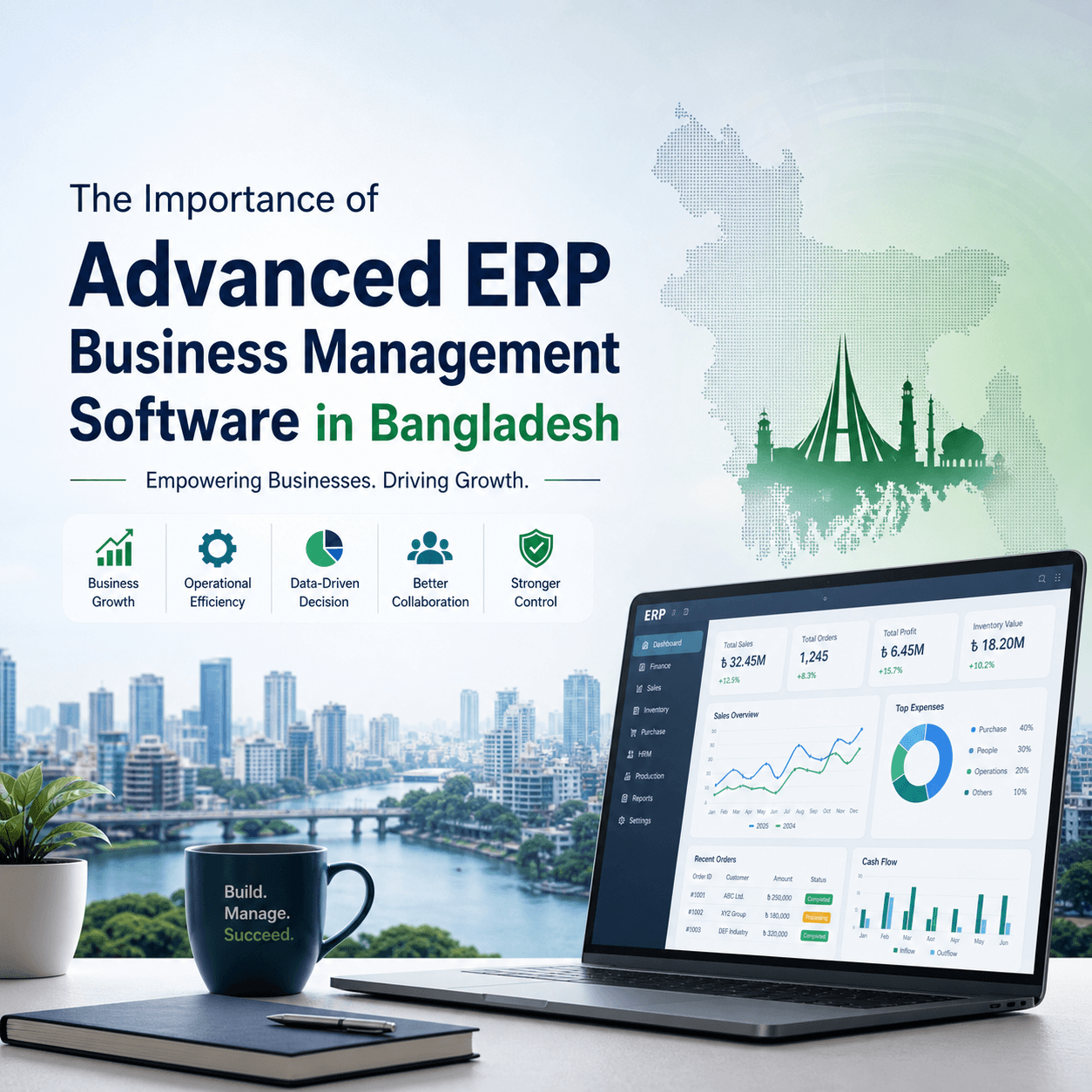
If you run a business in Bangladesh in 2026, you can probably feel it: things are moving faster than your spreadsheets can keep up with. Customer expectations are higher, compliance is tighter, margins are under pressure, and competition is no longer just local. This is exactly why Advanced ERP Business management software is no longer a “nice-to-have.” It is becoming the operating system for serious companies that want control, visibility, and scalable growth. In Bangladesh’s evolving economy, Advanced ERP Business management software is one of the few upgrades that improves finance, operations, inventory, sales, and decision-making at the same time.
Bangladesh is in an interesting phase. Manufacturing is modernizing, retail is becoming more data-driven, logistics is expanding, and even mid-sized businesses are being pushed to act like enterprises. In that environment, relying on disconnected tools creates blind spots and costly delays. A well-implemented Advanced ERP Business management software setup brings everything into one aligned flow so leaders can see what’s happening in real time and teams can execute without constant manual coordination.
Bangladesh In 2026: Why Management Complexity Is Rising
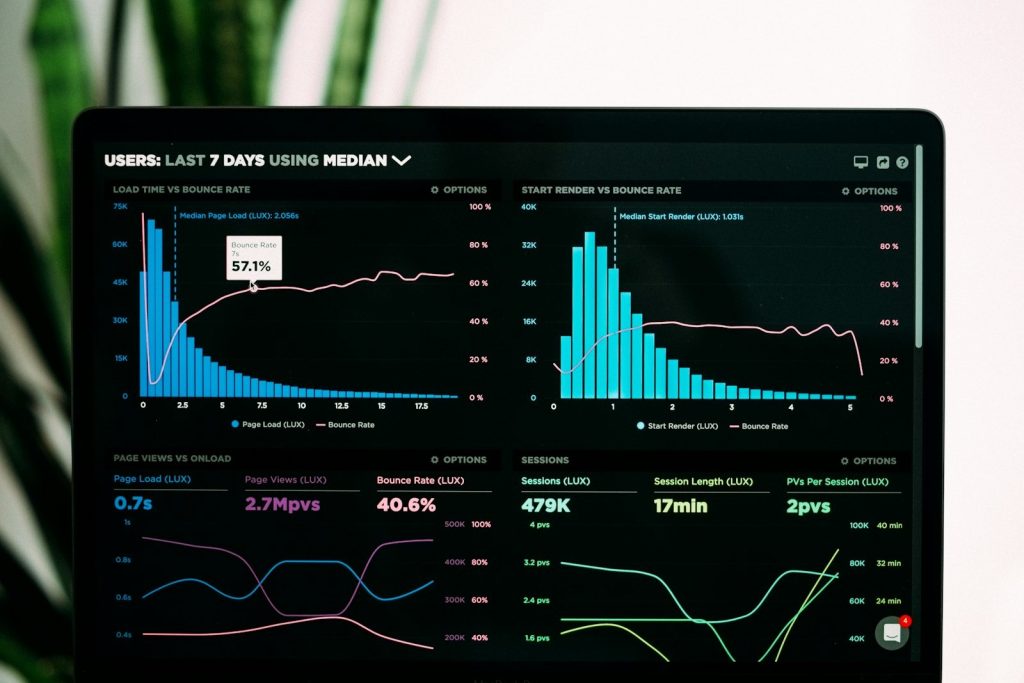
Bangladeshi businesses are dealing with a mix of growth and complexity. Many companies are expanding beyond one location, adding new product lines, building dealer networks, exploring eCommerce, and managing hybrid workforces. At the same time, the cost of mistakes is rising. Late deliveries, stock-outs, inaccurate costing, and slow financial closes do not just hurt efficiency. They hurt brand trust and cash flow.
Adding to these challenges are tightening local compliance regulations similar to those seen in other regions such as Hungary where new transfer pricing decrees have been introduced tightening local compliance. This is where Advanced ERP Business management software becomes important in a practical way. Instead of managing finance in one system, inventory in another, HR in spreadsheets, and approvals in WhatsApp, ERP connects the dots. It forces consistency, keeps every department working from the same source of truth, and creates accountability through workflows, roles, and audit trails.
The Real Problem With “Patchwork” Tools
A lot of Bangladeshi companies grew using whatever worked at the time: Excel, basic accounting tools, standalone POS, separate warehouse software, and manual registers. The problem is that patchwork setups create invisible losses.
Finance teams spend days reconciling sales, purchases, VAT, and inventory adjustments. Operations teams make decisions based on yesterday’s updates. Management reports become “approximate,” and planning becomes reactive. When growth happens, the same patchwork turns into daily firefighting.
A strong Advanced ERP Business management software implementation replaces that chaos with a system where data flows automatically across departments. When sales happen, inventory updates in real-time. This is crucial for businesses dealing with high transaction volumes as real-time inventory management can break down without the right systems in place. When purchasing happens, commitments appear in finance. When production consumes material, costing updates. That is how you stop managing the business by guessing.
What “Advanced ERP” Means Now (Not The Old ERP Idea)
When some people hear ERP, they imagine something heavy, rigid, and slow to adopt. But modern Advanced ERP Business management software is different. It is modular, configurable, mobile-friendly, and designed to integrate with your existing tools. It also includes automation and AI-driven insights that help leaders make faster decisions.
In 2026, “advanced” typically means these capabilities are available as standard building blocks: real-time dashboards, role-based approvals, granular security, barcode and QR workflows, flexible deployment (cloud, on-premises, or hybrid), multi-branch controls, and integration with systems your teams already use.
Why ERP Matters Specifically In The Bangladeshi Landscape

Bangladesh has its own operating realities: fast-moving trading businesses, complex manufacturing, multi-warehouse distribution, dealer-based sales models, seasonal demand spikes, and tight working capital cycles. These realities punish inefficiency.
With Advanced ERP Business management software, Bangladeshi organizations can manage high transaction volumes effectively. They can run multiple companies or units seamlessly while standardizing approvals and still staying flexible enough to handle local exceptions. It is the difference between “we grew bigger” and “we grew better.”
The Core Value: One Source Of Truth Across Departments
The biggest hidden advantage of Advanced ERP Business management software is that it creates a single version of reality. Sales, finance, procurement, inventory, production, and HR are no longer telling different stories.
When your leadership team sits down to review performance, they can trust the numbers. When your managers plan purchases, they can see actual stock, in-transit items, reserved inventory, and expected demand. When finance forecasts cash flow, they can see real commitments, not just invoices.
That “single truth” is what supports scale.
How Advanced ERP Impacts Key Industries In Bangladesh
Bangladesh is not one business environment. It is many. But ERP’s value becomes clearer when you look at the industries where operational control directly impacts profitability.
In garments and manufacturing, Advanced ERP Business management software helps manage bills of materials, production planning, work orders, material consumption, wastage tracking, machine utilization, and accurate product costing. In trading and distribution, it helps with multi-warehouse inventory, batch/serial tracking, dealer pricing, credit control, and faster order-to-cash cycles. In retail, it connects POS with inventory and finance so stock and profitability are visible in near real time. In logistics, it supports tracking, dispatch planning, and tighter warehouse operations through WMS workflows.
Why Modular ERP Wins In 2026

One reason ERP projects fail is that businesses try to implement everything at once. Modular systems reduce that risk. A modular Advanced ERP Business management software approach lets you start where you feel the pain most, then expand as the organization becomes comfortable.
This is where modular Focus ERP solutions stand out in practical terms. With Focus 9, Focus X, Focus WMS, Focus MRP, and Focus POS, businesses can begin with Finance, HRMS, CRM, Inventory or POS then scale into a full enterprise system when ready. That makes ERP adoption realistic for both mid-sized and fast-growing organizations.
The Modules That Usually Create The Fastest ROI
Most Bangladeshi businesses see quick returns when they fix leakage points. The most common “ROI-first” modules in Advanced ERP Business management software are finance, inventory, procurement, sales, and warehouse operations.
To keep it readable, here are typical high-impact starting points:
- Finance + Inventory to stop reconciliation pain and clean up reporting.
- WMS / Barcode Workflows to reduce picking errors, shrinkage, and stock mismatch.
- MRP / Production Planning to improve material planning and delivery timelines.
Once these foundations are stable, adding CRM, HRMS, service management, or advanced analytics becomes much easier.
Integration Is Not Optional Anymore
In Bangladesh, many companies already have tools they depend on. Accounting teams may be comfortable with Tally or QuickBooks. Some companies work with SAP in certain units. Others rely on industry-specific solutions.
A modern Advanced ERP Business management software should not force you to start from zero. It should integrate cleanly. Systems like Focus ERP are built with strong integration capabilities, allowing data exchange with platforms like Tally, SAP, and QuickBooks, while still keeping ERP as the central operating layer.
The result is simple: less re-entry, fewer errors, and faster reporting.
Customization Without Breaking The System
Bangladeshi businesses often have unique processes. Maybe your approval chain depends on branch, amount, product category, or customer type. Maybe your pricing differs by dealer tier. Maybe your production workflow is not standard.
The danger is over-customization that makes the system fragile. The better approach is configurable workflows. With Advanced ERP Business management software that supports zero-code workflow creation, role-based approvals, and granular security, you can map real processes without creating a maintenance nightmare.
That balance matters a lot in 2026 because businesses need to keep improving processes, not freeze them.
Real-Time Dashboards Change Decision Making
Most companies say they want “data-driven decisions.” But the truth is, they often do not have data at decision time. It is stuck in reports that arrive late or require manual work.
With Advanced ERP Business management software, real-time dashboards give leaders a live view of cash position, receivables aging, inventory movement, sales performance, purchase commitments, and production status. It is not only about visibility. It is about speed. When issues appear, you can act before they become expensive.
AI-Driven Insights Are Becoming Practical (Not Hype)
AI inside ERP is finally becoming useful for day-to-day management. In 2026, businesses are using AI-driven insights to detect unusual transactions, highlight slow-moving stock, spot demand shifts, and forecast replenishment based on patterns.
When Advanced ERP Business management software includes built-in intelligence, the system starts guiding your team toward better actions, not just recording what happened. For Bangladeshi businesses with tight margins, that guidance is valuable.
Mobile Access Is A Must In Bangladesh

A lot of operational work happens outside the office: warehouse checks, store audits, field sales visits, on-site approvals, and delivery coordination. If ERP only works on a desktop, adoption suffers.
A mobile-ready Advanced ERP Business management software setup helps managers approve workflows quickly, sales teams check stock and pricing, and executives see KPIs without waiting for a meeting. In Bangladesh’s fast-moving environment, mobile access can be the difference between “we’ll do it tomorrow” and “done today.”
Security And Role Control Matter More Than Ever
As systems become centralized, access control becomes critical. Not everyone should be able to see payroll, change pricing, or override approvals. ERP should enforce roles and permissions cleanly across departments and branches.
With Advanced ERP Business management software that offers granular security and role-based approvals, you reduce internal risk and create clearer accountability. That is especially important for multi-branch businesses, group companies, and organizations preparing for audits or external investment.
Cloud vs On-Premises vs Hybrid: What Works In 2026
In Bangladesh, deployment decisions often depend on connectivity, compliance, internal IT strength, and leadership preference. Many businesses like cloud for speed and lower infrastructure burden. Some prefer on-premises for control. Hybrid is common when certain sites need local reliability but management wants centralized access.
The right Advanced ERP Business management software should give you options. Focus ERP’s flexible cloud, on-premises, or hybrid deployment makes adoption easier because you are not forced into one model.
What To Look For Before You Choose An ERP Vendor
The software matters, but the partner matters just as much. In Bangladesh, many ERP projects fail because of weak requirements gathering, poor change management, or limited post-go-live support.
You want a partner who understands how Bangladeshi businesses actually operate and can align the system with business goals instead of just “installing software.” A strong ERP partner will guide process design, data migration, user training, role security, reporting, and phased rollout.
How Infoex Bangladesh Fits Into This Picture
At Infoex Bangladesh, we simplify enterprise management through next-generation ERP software solutions that align technology with business goals. As a certified partner and distributor of Focus ERP, Farvision ERP, and Impact+ ERP systems, we help organizations drive digital transformation across finance, manufacturing, retail, and logistics.
When we talk about Advanced ERP Business management software, we are not talking about a one-size-fits-all rollout. We focus on modular adoption, realistic timelines, and systems that scale with your organization. Whether you want to start with Finance, HRMS, CRM, Inventory, or POS, or you need a complete multi-entity ERP with WMS and MRP, we help you design it in a way your teams can actually use.
A Practical Example: Scaling From One Module To A Full ERP
Many companies start because one area is hurting. They might be losing money due to stock mismatch, struggling with delayed financial closing, or facing audit pressure.
With a modular Advanced ERP Business management software strategy, a business can begin with core finance and inventory, then add Focus POS for retail outlets, Focus WMS for warehouse control, and Focus MRP for manufacturing planning. Because the modules are designed to work together, expansion feels like building on a foundation, not starting over.
Implementation Success In Bangladesh: The Human Side
Even the best Advanced ERP Business management software will fail if people do not adopt it. In Bangladesh, adoption improves when teams see immediate value and when leadership supports process discipline.
The rollout should include clear SOPs, role-based training, and a support structure for the first few months. It also helps to create internal “ERP champions” in each department. When users know who to ask and what the new process is, the system becomes part of daily work faster.
The Payoff: What Businesses Typically Gain
When ERP is done right, the gains are not vague. They show up in measurable ways: faster closing, fewer stock variances, better cash flow control, improved on-time delivery, less manual reporting, and more confident decisions.
Most importantly, Advanced ERP Business management software gives leadership time back. Instead of chasing updates and fixing preventable errors, they can focus on growth, partnerships, expansion, and customer experience.
The Bottom Line For 2026
Bangladesh’s business landscape is getting more competitive and more complex. That is not slowing down. The companies that win will be the ones that run operations with clarity, speed, and control.
If your business is still relying on disconnected tools, manual approvals, and delayed reporting, now is the time to consider Advanced ERP Business management software not as an IT project, but as a core business strategy. In 2026, ERP is not about becoming “digital.” It is about becoming resilient, scalable, and ready for whatever the market demands next.
FAQs
What Is Advanced ERP Business Management Software, In Simple Terms?
Advanced ERP Business management software is a single system that connects finance, sales, inventory, procurement, HR, production, and reporting. It reduces manual work, improves control, and provides real-time visibility.
Is Advanced ERP Business Management Software Only For Large Enterprises?
No. Many mid-sized Bangladeshi businesses adopt Advanced ERP Business management software using a modular approach. You can start with finance or inventory, then expand to WMS, POS, CRM, or MRP as you grow.
How Long Does An ERP Implementation Usually Take In Bangladesh?
The duration of an ERP implementation largely depends on the specific modules and the readiness of the organization. A focused rollout of Advanced ERP Business management software can go live in a matter of weeks. However, more complex multi-entity setups that incorporate Warehouse Management Systems (WMS) and Material Requirements Planning (MRP) may take a few months, especially when factoring in training and data migration.
Can ERP Integrate With Tally, SAP, Or QuickBooks?
Absolutely. Modern Advanced ERP Business management software is designed to support integration with various systems. For instance, Focus ERP solutions, which offer advanced features, can seamlessly integrate with tools like Tally, SAP, and QuickBooks. This significantly reduces the need for data re-entry while keeping all systems aligned.
What’s The Biggest Reason ERP Projects Fail?
Interestingly, most ERP project failures are not due to software issues. Instead, they often stem from unclear requirements, weak change management strategies, and inadequate training. The effectiveness of Advanced ERP Business management software is greatly amplified when processes, roles, and user adoption are meticulously planned.
Should We Choose Cloud, On-Premises, Or Hybrid ERP?
Choosing between cloud, on-premises, or hybrid ERP largely depends on factors such as connectivity, compliance requirements, and internal IT capacity. Fortunately, the best Advanced ERP Business management software supports cloud, on-premises, and hybrid options. This flexibility allows businesses to select the option that best fits their operational needs in Bangladesh.
Talk To Us Before Small Problems Become Expensive Ones
If you’re currently grappling with mismatched inventory levels, slow reporting processes, manual approval workflows or increasing operational complexity, it may be time to consider implementing a more robust system. At Infoex Bangladesh, we specialize in helping businesses choose, implement and scale Advanced ERP Business management software in a practical and modular manner. Our goal is to provide you with quick control over your operations while allowing for seamless growth without chaos. Reach out to us today and let’s map out the ideal ERP path tailored specifically for your business needs and 2026 goals.
YouBlog comment creation guide make a strong point that disconnected systems become a bigger risk as businesses grow and compliance requirements increase. One challenge many companies face is that ERP success depends just as much on employee training and process improvements as the software itself, so it would be interesting to see a follow-up post covering implementation best practices and common pitfalls.